Asia ties key to recovery
UAE will achieve two to three per cent growth in its gross domestic product (GDP) by the end of the year.
And economic ties with India and China will help the emirate recover faster as they have already emerged from the downturn.
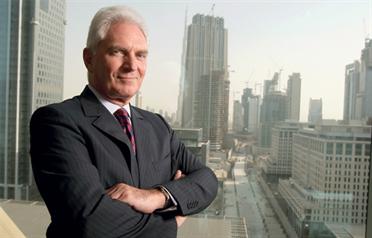
These predictions were outlined by Dr Nasser Saidi, Chief Economist of Dubai International Financial Centre Authority (DIFC), in an exclusive interview with Emirates Business.
"At the beginning of the year I went out on a limb and mentioned we'd be able to achieve two to three per cent [GDP growth]," Saidi said, "I still think we will be able to achieve that."
"As we go ahead what's interesting is there has been good economic progress. I see our links with Asia as being extremely important going forward.
"As recovery comes about, particularly in the second half of the year after Ramadan, we will benefit from the links we have with Asia.
"Asia is now our main trading partner and we're seeing growth re-emerging there and as that happens trade will pick up, tourism is starting to pick up and with time you'll see growth coming back.
"The signs are all there. The next thing to do is to make sure that international economic developments allow you to expand and what's favourable there is your Asian links," he said.
Saidi was born in Manchester, England, to a Lebanese father and Irish-Scottish mother, but spent most of his life in Beirut. He first developed an interest for economics at the age of 16 when he learnt his dinner at his father's hotel in Lagos, Nigeria, equalled a third of his waiter's pay cheque.
"It led to questions about what determines pay," he said, "what determines poverty, why are people paid different amounts, what is it that leads to economic growth. And today, economics fundamentally for me is about getting people out of poverty."
As we begin to talk about how much of this goal he has achieved, he quickly moves on: "The past is done. There's no point looking at it.
"When I think of what remains to be done, economic development looms large here. Things like corporate governance are important to me. I'd like to be involved in bringing the region up to its full financial role."
Summarising the current situation, Saidi said history would show the region was not hit as badly as people perceived today.
"Very few economists saw the downturn coming," he said. "I thought that emerging markets would be less impacted. I continue to think so. When history's written over this period it will show the emerging markets including the GCC will have weathered the storm much better than Europe and the US.
"From an economic policy point of view, when all is said and done, this will be a very salutary shock to the system because it has forced you to think of what type of economic policies you should have in place, in terms of monetary, fiscal and financial policies. As they say the blow that does not kill you strengthens you."
Saidi said while the first priority continued to be greater regional economic co-operation, the world's economic geography had changed and it has become imperative to increase links with India, China and other emerging economies in Asia.
"All the countries of Asia should be our natural hinterland, but India should be given a priority particularly for the GCC countries.
"If you think of what's been happening over the past 10 years, you have a new economic geography of the world that's been emerging, shifting towards the east. We're privileged in that we're right in the centre between Europe and USA on one side and Asia on the other.
"The main issue is how do you position yourself to benefit from the emergence of the emerging markets."
Changing tack, he said that as Dubai's debt was a result of investments in infrastructure, there was little to worry about.
Facilities such as ports, airports, transportation, telecoms and logistics have made it a crucial regional hub and will allow Dubai to recover quickly.
"The debt that Dubai has is not to finance consumption. We didn't have a party. The debt it has is because it has invested in infrastructure and development projects. That is not going to go away.
"The second part is that you're investing for the future, not for the past or for now.
"The real estate sector is already reaching a new equilibrium. We've seen values and rentals go down. People who were previously living in Sharjah or elsewhere are moving into Dubai. And some are living here and working in Abu Dhabi. These are positive aspects."
Jebel Ali Port remains crucial to Dubai's economy and future growth, he added.
"In the past, if you were trading with the Gulf countries, exporters would have to sell their goods by stopping at each coast.
Now they just come to one port – Jebel Ali – and distribute from there. That means you're a trade hub and a wholesaler."
Increasing emphasis must be put on education, innovation and integration of regional economies, he said.
"We've got natural resources – two-thirds of the world's energy is in this region. We have financial resources and young populations, which means we have human potential.
"We have to make sure we educate it correctly so that it is equipped to face the challenges. We need to do much more in science and technology than we do today.
"We are not investing enough in maths and quantitative education which is a big problem area.
"We need to encourage much more innovation. You can be enormously wealthy but you can waste that wealth.
"What's most important is to encourage young people in the country's schools and universities to look at research and innovation."
Curriculum Vitae
Dr Nasser Saidi is Chief Economist of the Dubai International Financial Centre Authority and Board Member of the Hawkamah Institute for Corporate Governance at DIFC.
Previously, he was the Minister of Economy and Trade and Minister of Industry of Lebanon between 1998 and 2000. He was the First Vice-Governor of the Central Bank of Lebanon.
He holds a PhD in economics from the University of Rochester, USA, an MSc from University College London and a degree from the American University of Beirut.
Keep up with the latest business news from the region with the Emirates Business 24|7 daily newsletter. To subscribe to the newsletter, please click here.