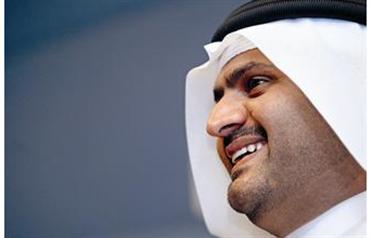
When someone is chosen by His Highness Sheikh Mohammed bin Rashid Al Maktoum, Vice-President and Prime Minister of the UAE and Ruler of Dubai, to act as his personal head of finance and administration, they know they have arrived. They are handed an incredible responsibility and cannot afford to slip – ever. It is as demanding as it is rewarding. One would expect to stumble, falter and crumble under the pressure. But Nasser Al Shaikh would have none of that. Appointed to Sheikh Mohammed's Executive Office in 2001, the son of leading businessman Hassan bin Al Shaikh, had no idea he would become one of Dubai's most influential, trusted and powerful people. Today, as Director General of Dubai Department of Finance, Al Shaikh is one of six pillars of Dubai's Supreme Fiscal Committee, the advisory council appointed to steer Dubai through the downturn, safeguard its future and set in stone practices that will place the emirate as one of the world's top four financial capitals. Add to this his roles as chairman of mortgage lender Amlak, master developer Deyaar, education provider Taaleem and education investment arm Madaares, and it is easy to understand how much responsibility Al Shaikh has been entrusted with. Moreover, he is also Director of Dubai Aerospace and Vice-Chairman of the National Bonds Corporation. This has to take its toll. Is one person really capable of wearing so many hats? Yes, is his answer. He loves his work. He loves Dubai. And even a recent wave of international media criticism has failed to faze him. "We have to respond to them with actions," he said. "The interest the international media has taken in Dubai is a sign of our success. If you're not successful, no one cares about you. But if you look at the amount of coverage we've been getting – I won't weigh negative or positive – but it's been substantial." Any publicity is good publicity? "Exactly, exactly. This is testament to how successful Dubai has been," he said. "The fundamentals of Dubai have not changed. There are only a few places in the world where you can see what 200 nationalities can do. And this one of those places. "I don't think any city has faced such a media war in recent times. But you know, we're still standing, we're still creating jobs. We have to let our actions speak. "Everything that was done here has been challenged in the past. Look at the Jebel Ali ports. When the decision was made many years ago, many said Dubai will end up having the largest man-made swimming pool in the world. "Today, look at it – it's one of the top terminal ports in the world. I mean, we've witnessed this all the way. It's very important for us not to let it distract us. It's always more motivating to be the underdog. "We're not living in a state of denial. We know that these times are challenging but when you run comparisons, we're in a much better position than others," he said. "Overall, this has been a global phenomenon. We have to be realistic. It will take time. Nothing will change over night. "If you look at past levels today, we're comparable to 2007. So we're not that far back. Of course 2008 was an extraordinary year. So it cannot be our benchmark. "Even 2007 was a good year. If we go back to 2007 levels, we'll be fine. A correction of this nature is healthy. It makes property more affordable for people. We're correcting mistakes, making the right steps forward and taking action," he said. Is one of the actions greater transparency? There has been a significant increase of government interaction with the media – indeed, departments will soon have dedicated public relations officers. "This is one of the changes that is happening and it's not short term," said Al Shaikh. "It's for the long term. I remember the executive council meeting, the one before last, where His Highness Sheikh Mohammed came, and we were honoured for him to come and inaugurate it. "Over there were all the director generals of the government. And he had a few points to make. "One of the points was he reminded us that we're civil servants and it's part of our duty to communicate to people. Some of us have been doing it, some of us have not. "But it is a mandate from the Ruler to communicate with people. It's very important to listen to them and explain to them what's going on. We owe it to the population here," he said. Despite being at the heart of government, Al Shaikh admitted that, by growing up in a business family, he believed his career lay in commerce. But, he said, the opportunity to contribute to the future of Dubai changed everything. "Dubai has given us a lot, and you say, 'OK, I'm going to play my part and give back for a few years'," he said. "This started in 2000 and it is still going on. It's all a part of giving back to the place that gave you so much," said Al Shaikh, speaking to Emirates Business at the Dubai Eye studio. He is talking after an hour-long Q&A on the Business Breakfast Show. He was grilled about the economy, pushed into uncom