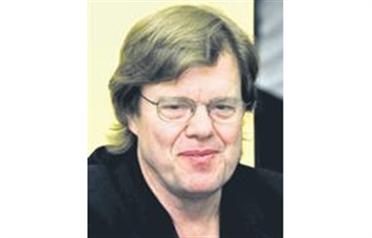
American lensman Joe McNally returned to the UAE this week to teach the region's photographers a thing or two at the annual photography extravaganza – Gulf Photo Plus. Tickets for McNally's three workshops at the event, where he also signed advance copies of his hot new book, The Hot Shoe Diaries: Big Light from Small Flashes , were the first to sell out. He spoke to Emirates Business before the event, talking about his workshops, how the recession has impacted the photography business and the sheer breadth of his work. You do work for Fortune 500 companies, as well as magazines such as National Geographic . How do the two compare? Which challenges you more? Each job has its own pressures. Certainly, doing a campaign for a multinational entails a great deal of effort and management on the photographer's part. When doing something like that, you are in the field sometimes with as many as 20 or 30 people, and are acutely aware of how much money is being spent. When you are out for Geographic , you are mostly alone. You have to be your own art director, lighting guy, and photographer. As well as a diplomat, psychologist, foreign relations expert, and, occasionally a bit of a [secret agent] MacGyver with a camera in terms of figuring out ad hoc, seat-of-the-pants solutions. With corporate or ad jobs, the photos are often the result of collaboration. With a magazine like Geographic , it's all on you. How has the recession impacted the photography business? It is pretty severe. I know a lot of folks who are hunting for work. Photos are often seen as an "extra" in the corporate mindset. Use last year's pictures! Buy a cheap stock photo instead of creating new art! That's the mandate in times like these. May I say hats off to organiser Mohamed Somji for pushing ahead with GPP during this drought. It is an act of faith and courage. This is perhaps a rather harsh question – do better subjects present themselves in a recession? Is there more pathos, for instance? Not necessarily. Unfortunately, even in the best of times, there is suffering somewhere. What do you aim at with your workshops at Gulf Photo Plus? Hopefully, what we do in the workshops and at GPP in general is help people take their photography to another level. When you attend a workshop, you are seeking something: Additional expertise, a niche skill, a kick in the pants creatively. Whatever that might be, GPP is the focal point in the Middle East to find it. The faculty here is so good it makes me want to stop instructing and just go to all the classes I can manage. Have you taken your finest picture yet? What is it? God, I hope not. That'd be like an actor who wins an Academy Award and thus maybe thinks the best work he'll ever do is in the rear-view mirror. The best pictures I'll take are still out there somewhere. I'm still on safari, hunting them down. Did you always want to be a photographer? No. I went to school to be a writer and was quite literally required to take a photography class. What was the first photograph you took, as a child? I remember I had an old Kodak box camera at the one week I went to sleep-away camp. My memory of it is fuzzy, much like the pictures I took. What one element makes a memorable photograph? Emotional impact. If a photo moves someone, it can survive other flaws such as poor light, or bad composition. Simple, eloquent human gesture trumps all. Who is the most famous person you've photographed? Hard to say. Lots of people have different measures of famous. I've photographed Hollywood stars, heads of state, famous scientists and athletes. I'm a generalist, so my career has been all over the lot in terms of subject matter. Tough to meter that. And what would you say is the most memorable picture? In terms of sets of pictures, I would say the Giant Polaroid collection known as Faces of Ground Zero was significant in that it helped people heal after 9/11. Those folks in those pictures are truly significant in my book. The collection itself, by touring and becoming a book, helped raise close to $2 million (Dh7.34m) for the relief effort in New York following 9/11. It was also one of your most ambitious projects, with 85 life-size images of rescue workers, survivors and relatives of victims of the World Trade Center attacks. Are you working on anything approaching that scale? No, not really. The scale of that project was in response to the scale of the event. Hopefully, nothing of that magnitude ever happens again. What would you says is the biggest hurdle to a career in photography? You hear "no" a lot as a photographer, so you have to be very tenacious. Lots of people out there are standing in line just to turn you down. So the challenge is to keep your enthusiasm going and growing despite the hardships and difficulties. As a career photographer, do you find it hard to balance the commercial assignments with the ones that give you artistic fulfilment? There is food for the table and food for the soul. I've been blessed to