Lynx case will lead to better self-regulation
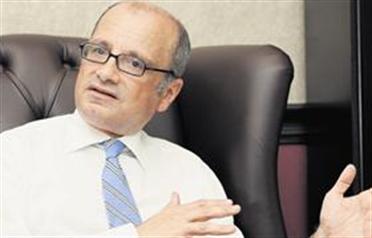
"Don't fire the baker," pleaded Dr Lance De Masi, President of the International Advertising Association UAE Chapter.
The head of the largest IAA chapter and president of American University in Dubai, hoped agencies would not make creative executives redundant as they face the challenges of a transformed advertising scene in the region.
"You would have all the presentations, but no one to do the work," he said.
Intending to talk about the late Dubai Lynx episode with Fortune Promoseven Qatar, he opened up to different concerns of the advertising world.
The IAA, led by this man who was the executive vice-president and COO of Impact BBDO Dubai, seems to maintain a balanced stance on what has happened, what could be done and what needs to be achieved, on both sides of organisers of such events and the agencies. De Masi did not free clients from their share of the responsibility either. He spoke to Emirates Business in his office at AUD.
Is the IAA angry with FP7 after what has happened since the Dubai Lynx awards announced withdrawing its Agency of the Year title?
The IAA is not angry, I wouldn't use the word angry. I think that while a lot of attention has been focused on one agency and what that agency seemed to be doing, we must be very honest with ourselves and not focus on that individual agency but on the industry's participation in the awards and the awards themselves.
We are representing the advertising industry and are major sponsors of the Dubai Lynx. In fact, following the emergence of these issues, we conducted in-depth and lengthy interviews with agency heads to try to understand their views of the awards and what has happened. We have provided the Lynx with that feedback.
What findings did you achieve from those interviews?
Very interesting results. The findings were three-dimensional. The first dimension is the clear recognition by the industry of Lynx as a very positive mechanism for encouraging and celebrating creative excellence.
The second dimension is a consensus that Lynx needs to tighten up, in terms of the rules and regulations, the cultural sensitivity, the eminent international jurors brought in, the documentation which accompanies the entries to the awards, that actually serves evidence that the rules have been complied with.
The third dimension is the consensus within the industry that what will really make this work is not the regulations alone, but additional self-regulation. Hence, the industry realises that compliance with the spirit of the law will make these awards better, moving forward.
Operation within a universally accepted ethical framework is required. It is not something that Lynx can legislate, but is that the industry must decide to express and comply with.
But we are referring to very well established agencies. Afterall, it was not FP7 alone that had works disqualified and withdrawn from the competition. Why would they present non-compliant work? Wouldn't that be compromising their reputation?
I can't get into the psychological nuances of what caused the situation. I think we need to keep in mind that the rules were in some ways rather open-ended and hence invited liberal interpretation and provided the opportunity for action that may not have been directly prohibited, but did fall outside the spirit of the rules. In the absence of experience regarding the consequences and implications of such actions on the awards and the industry, I think, people took a greater than desirable degree of liberty with those rules.
I see these all as a process of maturation and I am encouraged by the fact that the industry itself realises what has been risked here and understands the role of self-regulation in making this and any ceremony work here or anywhere else in the world. I believe this embodies a process of continuous improvement leading to a more successful future for the Dubai Lynx Awards.
Does this imply that the IAA has blamed the Dubai Lynx for what happened?
I don't blame the Lynx, just as I don't blame legislators who make laws. You legislate to the extent you can, and I think the Lynx organisers are quite experienced in making the laws. It is not a question of blame. I repeat, I think it is a question of learning and gaining from experience, and I think their response was a proper one, in terms of realising given some of the complexities of the region that the awards needed rules that were perhaps more specific and requiring additional documentation. That response is an over responsible, balanced one coming a considerable distance in terms of the legislative aspect while preserving the integrity of the awards ceremony as an event that should promote creativity.
One of the ads was disqualified for religious sensitivity. Wasn't the jury aware of this kind of sensitivity?
As you notice in the Lynx statement, they have made reference to consultants that have been appointed to introduce the jury members to the various sensitivities of the region including cultural norms and legal restrictions. The Lynx did work hard enough to prevent such a situation from developing and they responded to that by vowing to review the seniority and presumably the expertise of the people who are acting as consultants to the jury. This should provide a more forceful and therefore more effective voice as to the cultural context in which communication runs in this region.
An ad such as the one in question should have been subject for suspicion regarding where it possibly could have run. Once that issue would have been raised, I would suspect that the conversations following that would cause such an ad to be eliminated.
I wasn't part of the judging team and I can't explain why that ad was allowed to continue to compete, but I believe now there is increased awareness, as to how much attention an issue like this deserves.
Those who enter such competitions with world-class standards sometimes have the world in mind more than they do the region, where their focus is on advertising that could run anywhere in the world. However, now entries that appear suspect in that regard would be scrutinised with much more care.
How would that limit creativity?
My personal belief is that the Lynx rules are broad enough as to overwhelmingly encourage creative excellence. There is a lot of space in those rules for doing work that is creatively excellent. We cannot fall into the trap of believing that in order to achieve creative excellence you have to work outside the cultural norms of this region, first because this region is different from a cultural perspective, just like all regions are different from one another in a cultural perspective. I never accepted culture can be used as an excuse for creative "non-excellence".
But the creative standards in this region are still regarded as below world standards. This was conveyed in the tone of some jury members at the Dubai Lynx, who despite being very positive, still thought the region needed more efforts. Clients, on the other hand, also seek international agencies. Wouldn't that imply that someone is searching for something outside the region's norms?
I will let the clients speak for themselves in that regard. In my estimation, clients ought to check out what is available locally and regionally, in terms of satisfying their communications needs. What motivates some clients to do search for communications partners outside the region is perhaps the certainty that what they will be getting would be world class simply because it is sourced outside this region.
I understand that, I don't necessarily approve of it, nor do I believe it is needed. Getting to the subject of clients though, I also believe the awareness that has been raised regarding this award ceremony ought to also make clients think about their role in fostering creative excellence.
Everybody wants an awards ceremony, with advertising entries that conform to the rules that have been established. Those rules do require the clients' approval of the work. Maybe, that ought to make clients think about their own approval processes and the role of recognition of creative excellence that they play, in producing good work.
So should we expect awards to push the industry ahead?
Absolutely. I think that collectively all awards ceremonies in the region are very good for the industry. That, in addition to internal dynamics. To sum it up in one word, it is environment, environment, environment.
By that I am not referring to the air that we breathe outside the agencies, I am talking about the air we breathe inside. We have come a long way as an industry, certainly in the past 10 years. The environment in which creative people work, the incentives to creativity, the internal awards in the agencies, the positions of creative people within the industry and their agencies, have all come a long way. I hope the extremely positive directions set by some of the major agencies regarding showcasing creativity and creative people within the agency frameworks, continues on the same path, because it has made a world of difference and continues to do so.
What about the economic downturn? Agencies have no choice but to make redundancies?
I hope creative people don't lose their jobs and that less people in other positions are made redundant as well. Yet, if I were running a bakery, I would think twice before firing the people making the bread. In an economic downturn, people are being scrutinised for being redundant but I would say agencies should be mindful of what they do, because they might end up with great presentations but not the work.
PROFILE: Dr Lance De Masi, President of the International Advertising Association UAE Chapter.
Keep up with the latest business news from the region with the daily Emirates Business 24|7 newsletter. To subscribe to the newsletter, please click here.