News
Middle East is a perfect hub for long-haul flights
img_06282009_19d60cb7-357c-4c81-af7e-687f47814554.jpg
The economic recession has not evenly affected all the players in the aviation sector. AerCap for one – a New York-listed company engaged in engine leasing, trading and parts sales – remains to be highly profitable.
With $300 million (Dh1.1 billion) cash in hand, a healthy balance sheet and an expectation of at least 15 per cent growth this year over last year, the company can easily shrug off the crisis commotion.
And the secret to achieving this is by keeping the fleet portfolio young, says its chief executive officer.
"If you look at how the crisis affects the owners of the aircraft, you have to understand how airlines reduce capacity," Klaus Heinemann told Emirates Business. "Airlines reduce capacity by parking very old and large aircrafts, both of which we don't have in our portfolio. That is why we are not making any losses. We are still profitable but we wouldn't be if we have all the aircraft."
But that is not as simple as it sounds. Maintaining a portfolio of aircraft with an average age of six – half the industry average – means constantly disposing ageing ones.
"You need not only buy brand new aircraft but you also have to find ways to dispose them of. This is where we could help Waha Capital because we have our own facility in Arizona where we park our aircraft and sell the spares. So we have a way out for all the aircraft," said Heinemann.
AerCap has recently struck a 50 per cent joint venture with Abu Dhabi-based Waha Capital, a deal that will unlock further investment opportunities for the Amesterdam-headquartered firm.
"This region is enormously strategic for us because of the advantage of the location. The Middle East is a perfect hub for long-haul flights," he said. "You have to consider space to become a big hub airport. This is the problem of Heathrow for example. It sits in the middle of the metropolis and cannot expand and therefore there is a limit to what it can do as a hub. Abu Dhabi hasn't got space problem. Dubai hasn't got space problem. They can expand as much as they want."
You have been active in establishing joint ventures in various parts of the world like the one you had with China Aviation Supplier and Calyon Airfinance, and recently with Abu Dhabi-based Waha Capital. In addition to these deals what other prospects are you looking at, specifically in this region?
In the airline side, we are focusing on two areas in the Middle East. One is the new generation of low-cost carriers that is establishing very fast in this area. Global operators such as Etihad, Emirates and Qatar Airways have proved that you can establish a global operations from a single hub successfully. Clearly on the airline side, the Middle East market has developed beyond imagination over the past 10-15 years and we want to see how we can increase our market share in this area.
The second aspect is associated with the manufacturing process and Middle Eastern companies are becoming more involved in the supply chain both for engines and aircraft and we at AerCap/Aerventure of course are buyers of engines and spare parts.
The third aspect is aircraft maintenance, spare trading and engine trading. Abu Dhabi has come into focus in aircraft maintenance. We are a large user of this, obviously for our fleet and through our subsidiary AeroTurbine – provider of spare parts to the maintenance industry. In addition, we have a significant engine business. We have about 70 engines in our lease business, which is also heavily associated with our MRO [maintenance and repair operations] business.
So we saw opportunities in the region on the airline side, on the manufacturing side and on the maintenance side.
Are you looking at creating a manufacturing hub in the region?
We don't manufacture. We buy from manufacturers. But for example in this area, if spare parts need to be produced, then we will be interested in looking into that.
With regards to maintenance, how do you plan to pursue the opportunities in that area?
We need to discuss that. All I can say at this moment, we are a user of maintenance and Abu Dhabi increasingly wants to provide maintenance services. We believe in the future there might be interesting opportunities on how to operate the two areas together.
Are these plans sustainable given the fact that about 90 per cent of the workforce here are expatriates? They are not only more expensive, but the movement and attrition of people are also high.
Yes. But if you look at where the other core competencies are for maintenance, you will see that they are in Northern Europe, in Hamburg, Frankfurt… that is not low-cost environment either. Singapore operates mostly in Singapore and that's not low-cost either. From a cost perspective, I would not see a problem here. You don't necessarily need to have cheap labour. What you need to have is a good central location and you need to have scale and efficiency. Because if it would be about cheap labour the maintenance would be done today in China and India but it is not. It is being done in the US, Germany and Singapore. So I would not be too concerned about this.
Abu Dhabi-based investment holding company Waha Capital had earlier agreed to acquire a 50 per cent stake in AerVenture Limited with the remaining 50 per cent held by AerCap – an AerVenture's parent company. Who was the first one to make the approach?
We had an existing business relationship because Waha Capital sometimes bought from our aircraft so we knew each other and it grew from a normal business relationship to doing more than just trading aircraft with each other.
Isn't it because the company is in need of liquidity?
No. Our company has more than $1.2bn in equity. We have at the moment more than $300m in cash and a very profitable last year and we had a very profitable first quarter. We are not making any losses. Our share price in the first half of this year increased by more than 100 per cent.
So do you expect double-digit growth for this year over last year?
Yes, absolutely and that's contractual certainty. Because all our aircraft are placed, we know exactly how we will grow. We will increase our revenue line by 15 per cent-plus this year.
How will you do that?
The key reason for that is the crisis doesn't evenly affect all players in the aviation sector. If you look at how the crisis affects the owners of the aircraft, you will need to understand how airlines reduce capacity. Airlines reduce capacity by parking very old and very large aircraft such as Boeing 747 for example, both of which we don't have in our portfolio. That is why we are not making any losses, we are still a profitable firm but we wouldn't be if we have all the aircraft.
How old are your aircrafts?
On an average six years.
And what's the industry average?
The industry average I think is 12-13 years, so I think we are half of the industry average. It's a very young fleet.
Given that advantage, have you been insulated from the liquidity crunch as well?
We have raised over the past 12 months more than $2bn in additional funding. The rate is higher but it is only marginal. Today, we paid for our funding 75-100 basis points more than we paid before the crisis but because the interest rates have come down. Our overall interest costs, even with the margin increase, have substantially come down. In 2007, the firm's total interest costs inclusive of margin had been between five and six per cent. Today it is between two and three per cent. So our capital cost has come down dramatically.
What are the threats and risks in this industry?
There are threats. First of all, you should not overexpose yourself to a single airline. Therefore, we have a global portfolio. It is like a bank. If a single bank defaults, it must never affect the solvency of the company. Therefore, we have a policy of not exposing ourselves to any single airline for more than five per cent of our revenue. We diversify the risk geographically, between regions and various airlines.
How strategic is this region in your operations?
This region is enormously strategic because of its location. The Middle East is a perfect hub for long-haul flights. If you want to go from North America and Europe to Africa, to Far East Asia, to Australasia, to New Zealand, Australia, there is no better hub than the Middle East. It is better to fly via traditional routes. Geography plays a big role. You cannot create a hub like this for example in Russia. You will not have the same geographic advantage that you have here. Emirates pioneered it and now Etihad and Qatar Airways are doing the same thing and that is to simply take advantage of the location. We now have the momentum and we have the right geographical location. You have to consider space to become a big hub airport. This is the problem of Heathrow for example. It sits in the middle of the metropolis and cannot expand and, therefore, there is a limit to what it can do as a hub. Abu Dhabi hasn't got space problem. Dubai hasn't got space problem. They can expand as much as they want.
Given the $300m cash you have in hand and the robust balance sheet that you have, how much investments are you earmarking for this region. What kind of investments are you looking at?
On an average we invest between $500m and $750m per year in capex. For this year, it is going to be higher, with the expected investment being $1.7bn. That all goes to brand new aircraft.
Maintaining a portfolio of aircraft with an average age of six – half the industry average – means constantly disposing of ageing ones. Is that the key challenge?
The key challenge is to keep your portfolio young. You not only buy new ones but also find ways to dispose the aircraft. This is where we could help Waha because we have our own facility in Arizona where we park our aircraft and sell the spares. So we have a way out for all the aircraft. If you are in a recession, there is an enormously different behaviour with respect to rental levels and value between an old and a new aircraft. Therefore, you have to get rid of all that. And this is what made it attractive to Waha Capital because we can show them how to get rid of all that aircraft.
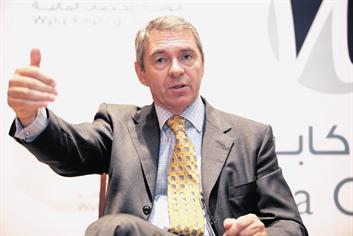
Klaus Heinemann
CEO, AerCap
Heinemann has been the Chief Executive Officer of AerCap since April 2003 and has more than 25 years of experience in the aviation financing industry.
AerCap's portfolio comprises 295 aircraft and 78 engines that are either owned, on order, under contract or letter of intent, or managed. The company also provides aircraft management services and performs aircraft maintenance, repair and overhaul services and aircraft disassemblies.
He has been a director of the company since 2002. He joined in 2002 from DVB Bank, where he was a member of the executive board. In 1988, he joined the Long-Term Credit Bank of Japan in London as Deputy General Manager and head of the aviation group.
He was later appointed as joint general manager of the head office at the Long-Term Credit Bank of Japan, where he was responsible for the transportation finance division before this division was sold to DVB Bank in 1998.
Heinemann started his career with Bank of America in 1976, where he helped build-up its aviation finance department in Europe. He holds the degree of Diplom-Kaufmann (Bachelor of Commerce) from the University of Hamburg.
Keep up with the latest business news from the region with the daily Emirates Business 24|7 newsletter. To subscribe to the newsletter, please click here.