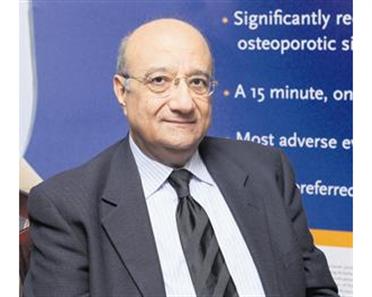
Osteoporosis affects 200 million women worldwide, with one in three between the ages of 60 and 70 diagnosed and two out of three aged 80 or older affected. Females are more likely than men to develop the brittle-bone disease due to changes in hormone levels as they age. However, 15 per cent of men over 50 also have it, according to data from the International Osteoporosis Foundation. Although treatment is administered on a daily, weekly or monthly basis, a new product launched by pharmaceutical company Novartis this week will change that. Aclasta is the first osteoporosis drug to be given on an annual basis and will be available on prescription. The treatment costs Dh2,365. Emirates Business spoke to Professor Dr Samir Elbadawy, Head of the Egyptian Osteoporosis Prevention Association, about the benefits of the drug and how osteoporosis can be prevented. How does Aclasta work? It is a 15-minutes intravenous treatment that lasts for one year because it goes into the bones. Then when the a bone breaks, the drug is released to help repair the damage and it works continuously. Is it only available for women? No, it can also be given to men. Usually many osteoporosis drugs contain HRT so they are only prescribed to women. How difficult is it to detect osteoporosis? I call it the silent thief because patients don't feel any pain at first. Often it is only when they break a bone that bone density tests are done and we diagnose it. This is why we want more awareness about the condition and encourage people over the age off 55 to have annual bone density tests. Lifestyle choices are a trigger of the condition, so how many cases can be prevented through changing the way we live? I would say more than 70 per cent. There are lots of things people can do, including maintaining a healthy weight and drinking a glass of milk everyday. It is also important for children to have milk because their bones are developing. People should eat nuts, broccoli, oily fish and spinach, as well as do regular exercise. Not smoking, avoiding carbonated drinks and cutting down on alcohol consumption also helps. People who are overweight often have denser bones [to take the extra weight] and it provides cushioning if they fall. What is the percentage of people with osteoporosis in the Middle East and elsewhere in the world? We know that 30 to 40 per cent of women in the West have it, but there have not been any studies in this region. It's something I aim to start. I believe at least 25 per cent of the population have it, although this has not been proved. Cases have increased over the years thanks to more awareness. However, women in the Emirates are at a risk, mainly because they don't go out in the sun. Studies show that just 20 minutes exposure to sun every other day between 11am and 3pm on the face and hands provides enough Vitamin D to absorb the necessary calcium to help prevent osteoporosis.