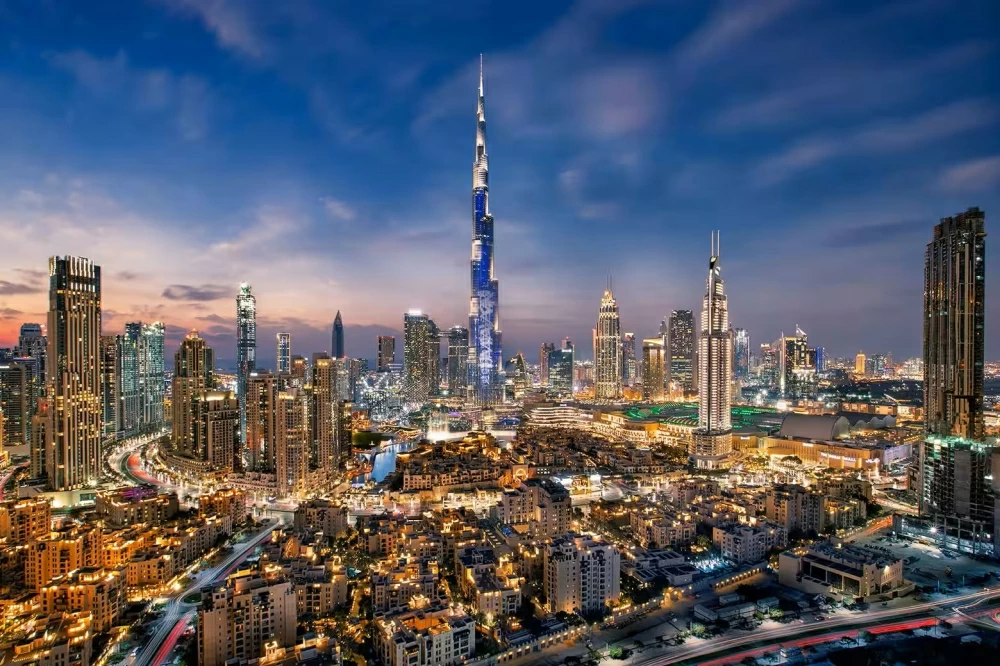
Burj Khalifa enters race for Seven Wonders of the Contemporary World by WTTC
Public from across the world will have the opportunity to nominate landmarks to be included in the list

Dubai's Burj Khalifa has entered a global race to be featured on the list of Seven Wonders of the Contemporary World, as part of an initiative launched by the World Travel and Tourism Council (WTTC) to identify the most prominent landmarks and buildings that have been built since 1801, and have helped shape the travel and tourism sectors, supporting local communities and economic development.
According to a statement issued by the WTTC, public from across the world will have the opportunity to nominate landmarks that embody the modern age of travel. The initiative aims to set a new global standard for contemporary wonder, focusing not only on architectural and cultural value, but also on the impact of these landmarks in revitalising local economies, attracting investment, and creating jobs.
The campaign will be held in four phases over a full year, with the Council opening the door for global nominations on July 7, 2026, with a list of 70 nominated entries to be announced on January 7, 2027, with the start of public voting. On April 7, 2027, the list will be reduced to 30 final entries, before the Seven Contemporary Wonders of the World will be unveiled on July 7, 2027.
Burj Khalifa: A symbol of Dubai's urban and tourism transformation
Burj Khalifa stands out as one of the world's most important modern architectural icons in the promotional video released by the World Travel & Tourism Council.
The tower took about 6 years to build before it was officially opened in 2010, becoming the world's tallest building with a height of 828 meters, while its construction cost about $1.5 billion.
Burj Khalifa has not only been a unique engineering achievement, but has also become one of Dubai's most prominent tourist and investment attractions, and has contributed to the establishment of Downtown Dubai as a global destination that combines tourism, commerce and leisure.

The tower includes world-class viewing platforms, a hotel, offices, and residential units, and its viewing stands attract millions of visitors annually, with significant revenue from ticket sales, although there is no recent unified official data on its total annual revenue.
Museum of the Future
The Museum of the Future in Dubai is also among the nominations for Seven Contemporary Wonders. The landmark had quickly become one of the city's most famous modern icons, thanks to its unique geometric design in the form of a ring covered in Arabic calligraphy.
The museum took about 7 years to implement before its opening in February 2022, at a cost of about 500 million dirhams, according to previous official data.
The museum has attracted worldwide attention, receiving more than one million visitors from 163 countries during its first year, before exceeding two million visitors from more than 172 countries in its first two years of opening, according to the Dubai Government Media Office and the Dubai Future Foundation.
Other main entries from the Arab world
The Grand Egyptian Museum
Also on the list of nominated landmarks is the Grand Egyptian Museum in Giza, the world's largest archaeological museum dedicated to a single civilisation.
The museum took more than two decades to build, from the groundbreaking in 2002 to its official opening in November 2025, with an investment of nearly $1 billion.
The museum houses about 100,000 artifacts, including the complete collection of King Tutankhamun's treasures that are on display for the first time in one place, with expectations to attract up to 7 million visitors annually, boosting Egypt's tourism revenues and boosting visitor spending.
Rabat Grand Theatre in Morocco
Also among the nominated Arab landmarks is the Grand Theatre in Rabat, Morocco, designed by the late Architect Zaha Hadid. It is located on the banks of the Abou Regreg River as part of the Rabat-Salé riverfront development project.
Almost completed in 2021, at an estimated cost of €190 million to €200 million, the project is one of the largest cultural projects in Morocco and Africa, with theatre and music performance halls and aims to strengthen Rabat's position as a global cultural and architectural destination.
Gloria Guevara, CEO of the World Travel & Tourism Council, said that wonders are not limited to centuries-ago achievements, stressing that each generation leaves its mark on the world, and inviting the public to participate in honouring the landmarks that have shaped the modern era and will continue to inspire future generations.
She added that the most impactful tourism assets do not only attract visitors, but also contribute to job creation, stimulate investments, support local businesses, and enhance the position of destinations globally.
Global list of modern era landmarks
Other landmarks that could enter the competition include Big Ben in London, the Statue of Liberty, The Ambassador and The Vessel in the United States, the Sydney Opera House in Australia, Marina Bay Sands and Joel Changi in Singapore, the Petronas Twin Towers in Malaysia, the Eiffel Tower and the Louis Vuitton Foundation in France, and the Sagrada Familia Church and the Guggenheim Museum in Bilbao in Spain.
The initiative revives the idea of the Seven Wonders of the Ancient World, which included the Great Pyramid of Giza, the Hanging Gardens of Babylon, the Statue of Zeus, the Temple of Artemis, the Mausoleum of Musolus, the giant statue of Rhodes and the Lighthouse of Alexandria.
In 2007, the New7Wonders Foundation launched an initiative to select the new Seven Wonders of the World, which resulted in the selection of the Great Wall of China, Petra, the Statue of Christ the Redeemer, Machu Picchu, Chichen Itza, the Colosseum, and the Taj Mahal, while the Great Pyramid was awarded honorary status as the only surviving wonder from the old list.