Global media impact is about credibility, reputation and trust: Dubai Media CEO
Dubai Media Incorporated CEO Mohammed Al Mulla says credibility, partnerships and identity are central to expanding international reach
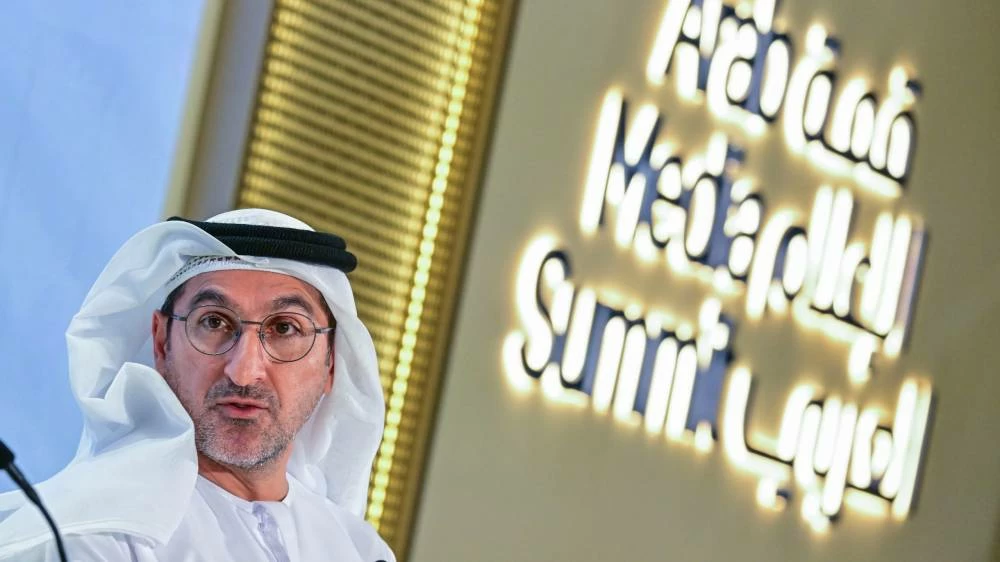
Mohammed Al Mulla, CEO of Dubai Media Incorporated, stressed that global media impact is no longer measured solely by reach and viewership figures. It also depends on an organisation's ability to build credibility, reputation and trust while remaining true to its identity and values. He noted that Dubai Media is working to expand its contribution to the global media ecosystem and make the Arab context and Emirati voice accessible to international audiences.
He said integrity, Emirati identity and public engagement are foundations that the corporation is committed to protecting. At the same time, it seeks to benefit from partnerships in technology and distribution to expand the reach of its content. He pointed to the previously announced partnership with Emirates Airline, which will allow the corporation's content to reach an international audience.
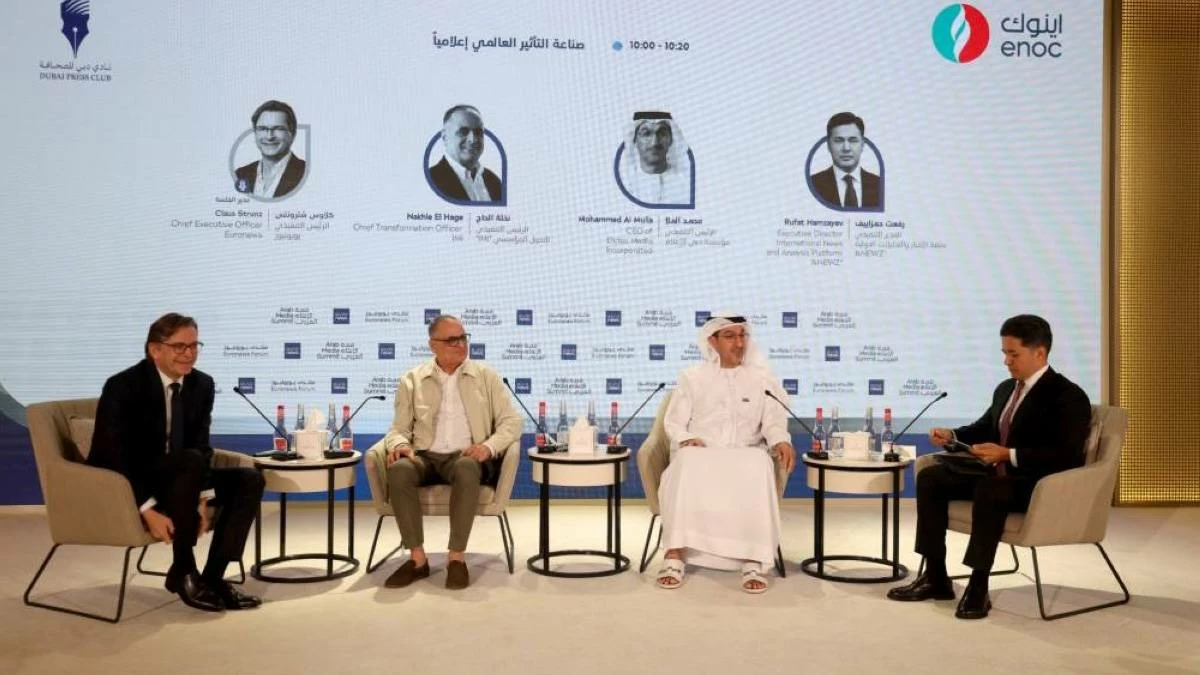
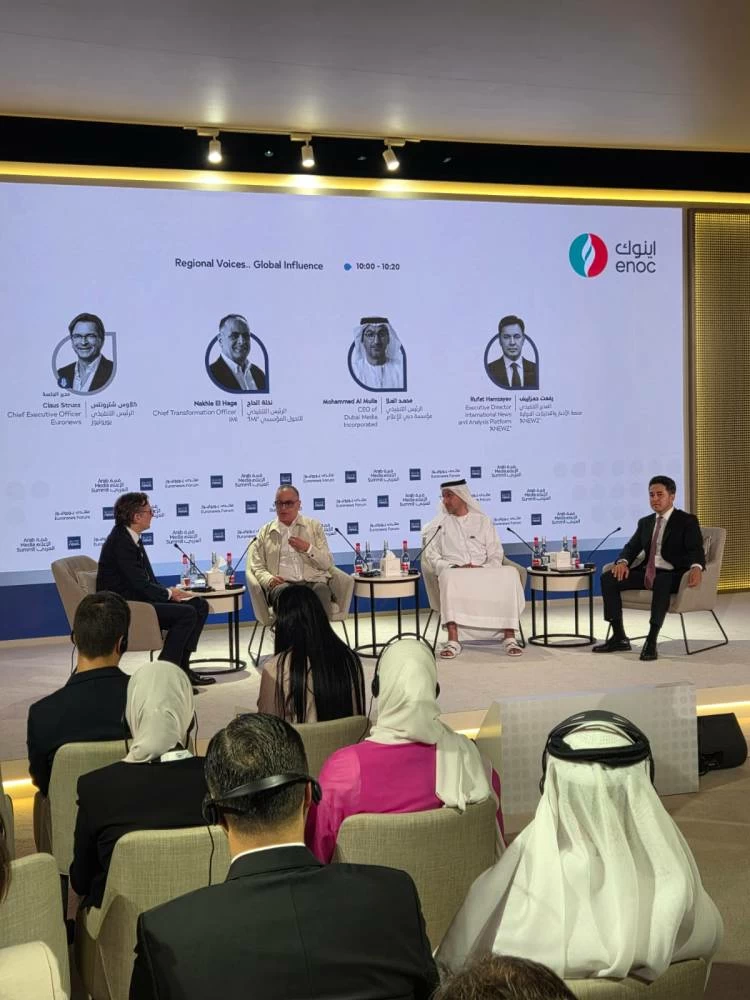
These remarks were made during the session "Making Global Media Impact" at the Arab Media Summit. 2026. The session brought together Mohammed Al Mulla, IMI Chief Executive Officer of Corporate Transformation Nakhla Al Hajj, and ANEWZ CEO Rifaat Hamidov. The session was moderated by Euronews CEO Klaus Strunz. Discussions focused on how media organisations in the region can transform their proximity to events into global presence and influence, and the roles of identity, credibility, technology and talent in that process. Speakers noted that media competition is no longer defined by who reaches audiences first or generates the highest number of views. Instead, the challenge is turning that reach into trust and sustainable impact.
Al Mulla said media organisations now operate in a world where geographical boundaries no longer limit the reach of content. Stories can be delivered to audiences around the world. However, wider distribution creates the challenge of maintaining credibility and identity while addressing different markets and cultures.
He stressed that DMC adheres to clear principles. "We support and protect our foundations," he said, explaining that these include integrity, Emirati identity and public engagement. While these values remain central, the corporation is open to collaboration in areas such as technology and distribution.
Al Mulla said that presenting the Arab voice to the world places identity at the heart of content creation. Reaching international audiences does not require changing a story's narrative or removing its local context. Instead, content should be presented in a way that preserves its identity and credibility while making it understandable to a wider audience.
He said viewership figures remain an important indicator in media, but they should not be the sole measure of success or impact. He stressed the importance of monitoring metrics such as users, viewers, watch hours and other indicators without turning them into the only benchmark of performance.
Al Mulla noted that a single piece of content may generate around four million views because of algorithms or distribution conditions. However, achieving such numbers does not necessarily mean an organisation has created real impact or built a sustainable relationship with its audience.
"Instead of trying to find viewers, it is important that viewers try to find us," Al Mulla said. He stressed that reaching this stage requires building credibility, reputation and trust, so audiences are willing to return to the organisation and actively seek out its content rather than simply consuming material delivered through algorithms.
He said the challenge is to strike a balance between numbers and impact. While organisations need performance indicators to understand their audiences, they cannot rely solely on algorithms. The widespread success of a single piece of content may be circumstantial, whereas building a media reputation is a long-term process.
Al Mulla said Dubai Media aims to make a greater contribution to the global media ecosystem rather than limiting its presence to a narrow audience segment. He said the goal is to make the Arab context and Emirati voice more accessible to global audiences.
He also highlighted the importance of partnerships in achieving that goal. He again pointed to the previously announced partnership with Emirates Airline, which will provide a new channel for reaching international audiences and expanding the reach of the company's content.
Nakhla Al Hajj, Chief Executive Officer of Corporate Transformation at IMI, said the Gulf region has significant strengths that position its media organisations to play a larger global role. He noted that proximity to major events is one of the region's most important advantages.
Al Hajj said that 20 to 30 years ago, many of the skills and resources needed to build globally recognised media organisations were concentrated in Western countries. He cited the launches of Asharq Al-Awsat and MBC Group from London before Arab media organisations later established stronger regional bases. Today, he said, media organisations are able to thrive in their home markets because of advances in infrastructure, investment, technology and talent attraction. He added that the region is now at the centre of many influential global developments, from economics and geopolitics to energy and talent, making proximity to these issues a source of insight rather than merely a geographical advantage.
Al Hajj said the objective should not be limited to telling the region's story to the world or conveying international stories to Arab audiences. Instead, media organisations in the region should become trusted sources of information for anyone seeking to understand this part of the world.
He said proximity generates insight, insight strengthens credibility and trust, and trust ultimately creates impact. While technology and accessibility have made it easier to deliver content to global audiences, the key challenge is turning that reach into influence. Credibility, he said, is built gradually "from story to story, word to word, and commentary to commentary", ultimately determining a media organisation's ability to influence audiences.
Rifaat Hamidov, CEO of international news and analytics platform ANEWZ, said a new media organisation entering a crowded market must clearly define its purpose and the distinct value it can provide.
He said proximity is one of an organisation's greatest assets, but it goes beyond physical location. ANEWZ's presence in Baku, at the crossroads of the South Caucasus and Central Asia and close to countries such as Turkey, Russia and Iran, places it near issues that feature prominently on the international agenda.
Hamidov stressed that global impact is not achieved simply by translating local news into English. "The secret and key to success is to provide an understanding of the regional context," he said. This requires adding local knowledge, expertise and perspective, enabling audiences outside the region to better understand the background and significance of events. He added that one of the keys to success is building diverse newsrooms that combine international expertise with local talent.
He said local journalists bring deep knowledge of their region, culture and events, while international expertise helps present that knowledge in ways global audiences can understand and engage with. Combining both strengths gives newsrooms a greater ability not only to report events but also to interpret and explain them.