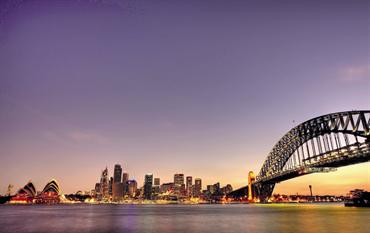
Most people, when asked to think of an Australian city, conjure up images of Sydney's mighty harbour bridge, stunning opera house and spectacular maritime setting. Confirmation of Sydney's status as by far the most high-profile metropolis Down Under came last month when it was named the number one city brand in the world for the second year running in the annual Anholt City Brands Index. Sydney grabbed the world's attention when it successfully hosted the Olympics in 2000 and has remained in the spotlight ever since. In just under a decade, however, it has become one of the world's most expensive cities. The Demographia International Housing Affordability Survey 2009 ranked Australia as one of the most expensive nations in which to purchase a home relative to income. For those living in the Australian economy this is not good news – but for Australians abroad and expatriates in the UAE there are some great investment opportunities, particularly as prices have fallen due to the economic downturn. However, non-Australians living overseas have to obtain approval from the Foreign Investment Review Board (FIRB) before purchasing property and there are restrictions on what and where they can buy. "The global financial crisis has impacted the AU$1 million-plus (Dh2.6m) sector, meaning there are properties on the market but not a lot of buyers," said Leanne Pilkinson, General Manager of New South Wales estate agent Laing and Simmons. "In some areas prices have dropped by 15 per cent at the top end of the market." This bodes well for foreign investors, as does the strength of the greenback against the Australian dollar, and makes buying an attractive option for those in the UAE. Roy Melick of Baker and McKenzie, a legal firm in Sydney and Melbourne that assists overseas buyers, said: "In the residential sector anecdotal evidence and newspaper articles are suggesting that properties costing less than AU$500,000 are still rising in price, primarily because we currently have government subsidies to assist first-home owners. Above that level and for premium properties, however, we have seen suggestions that prices have dropped by anywhere up to 20 per cent in certain suburbs of Sydney." Angus Raine, CEO of estate agent Raine and Horne, said: "Sydneysiders are absolutely obsessed with water. City or harbour beach suburbs such as Bondi and Manly are very popular with homebuyers, investors and tenants. History shows that the closer a quality property is to a waterway, the better it will perform long term." Raine and Horne is seeing improved sales in these areas, thanks to the lowest interest rates in 45 years and the government's first-home subsidies. The good news for international buyers is that they are also predicting a rise in residential rents due to increased demand for housing. The National Housing Supply Council's State of Supply Report says the housing supply shortfall in 2008 was 85,000 dwellings, a figure that could reach 203,000 by 2013. This is excellent for long-term landlords and overseas investors who need to rent out their properties when they are not in the country. "Sydney has the lowest residential vacancy rates in 25 years, which means rising rents coupled with low interest rates make investing in Sydney an excellent proposition for overseas-based investors," added Raine. In general non-residents can buy off-plan and new properties, certain pieces of residential land and time-share units where they can stay for no more than four weeks. The procedures for applying for FIRB approval can be found on the board's website – www.firb.gov.au – and specialists such as Baker and McKenzie can assist from the Australian end. Discussions began last year regarding easing of the restrictions on visitors, overseas businesses and non-residents. The Courier Mail reported in December that the federal government planned to relax the rules governing investment from abroad. The proposals would benefit reportedly 7,500 overseas buyers but at present the rules remain unchanged. Non-resident Australians and expatriates and nationals, especially those in the UAE, are well placed to obtain finance. David Johnston, Director of Property Planning Australia, an independent property adviser and mortgage broker, said: "The credit assessment departments of banks will look closely at the strength of the country the investor lives in, and also the professional qualifications of international investors. "All the normal procedures, such as providing pay slips and details of earnings for the previous year, apply to foreign investors as well as Australian citizens, an investor who is an expatriate or national from the UAE would not have too much trouble." In some cases, loan to value ratios may be capped for foreign applicants. "Most banks will lend 80 per cent to non-residents and 90 to 95 per cent to Australian citizens and as long as applicants can come up with the difference and the five per cent stamp duty, they should not have a pro