Saudi to raise crude output to 9.7m barrels
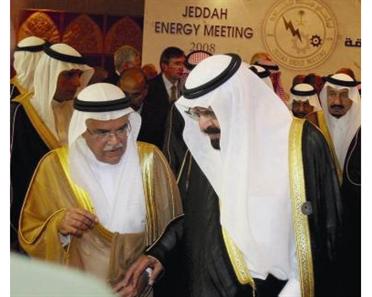
Saudi Arabia will increase its oil production by 200,000 barrels a day to 9.7 million next month and may pump more later this year if needed, Saudi Oil Minister Ali Al Naimi told producers and consumers in Jeddah.
Naimi's comments to government and business leaders came after crude oil rose to a record $139.89 in New York on June 16.
The Custodian of the Two Holy Shrines King Abdullah bin Abdulaziz said his country, the biggest oil exporter, seeks "reasonable" prices.
The International Energy Agency estimates that world oil use this year will climb 800,000 barrels a day, or one per cent, as demand increases in emerging markets.
Stagnating production from Russia and the North Sea are also contributing to higher prices, which have touched off strikes, riots and accelerating inflation in nations around the world.
"Saudi Arabia is prepared and willing to produce additional barrels of crude above and beyond the 9.7 million barrels per day, which we plan to produce during the month of July, if demand for such quantities materialises and our customers tell us they are needed," Naimi said.
He said Saudi Arabia's capacity will be 12.5 million barrels a day by the end of 2009 and may rise to 15 million after that if necessary. The President of the Organisation of Petroleum Exporting Countries, Chakib Khelil, blamed $135 oil on speculative investors, the sub-prime credit crisis and geopolitics, rather than a shortage of supply. Khelil, who is also Algeria's oil minister, yesterday dismissed the argument voiced by consuming nations that possible supply shortages are driving up prices.
"The concern over future oil supply is not a new phenomenon," he said.
More than 35 countries, seven international organisations and 25 oil companies were scheduled to take part in a summit, which started in Jeddah yesterday and was being chaired by King Abdullah. Kuwaiti oil minister Mohammed Al Olaim also called for greater regulation on oil market investors.
Opec itself is divided.
While Saudi Arabia is boosting output, other Opec members including Libya, Algeria, Iran, Venezuela and Qatar are opposed to higher production.
Libya's top oil official, Shokri Ghanem, on Saturday said his country may have to cut its own production in response to the Saudi move.
Kuwait, Opec's fourth largest producer, said it is ready to join neighbouring Saudi Arabia and raise oil output if needed.
Oil rose to $139.89 a barrel on June 16 as investors bought commodities to hedge against a weakening US dollar and concern mounted that demand is growing faster than supply.
Petrol retail prices over $4 a gallon in the US are raising concern that the economy may slip into recession.
Crude oil for July delivery closed June 20 in New York at $134.62 a barrel.
"Since joining Opec, the Kingdom of Saudi Arabia has been seeking a reasonable price, one that would not harm the producers or the consumers," King Abdullah said in his speech.