Tough terms keep gas giants away from Middle East
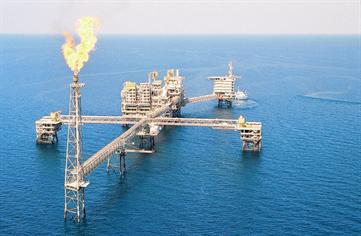
Companies having an expertise in gas production are rejecting the terms laid by Middle East countries with high gas reserves, a report from World Gas Intelligence (WGI) said. Gas producers in the Middle East are laying down increasingly tough terms for foreign companies and this could prove counterproductive for them in the long run, WGI warned.
"The world financial crisis bears part of the blame. But the string of poor results this year in Mideast tenders of upstream gas acreage – in Iraq, Bahrain and Qatar – point to a more fundamental problem: Middle Eastern governments and international oil companies have yet to find terms acceptable to both, a setback from the promising gas partnerships that blossomed in the region five years ago," WGI said.
WGI was particularly critical of Iraq, where extraordinarily tough conditions have ensured that either foreign majors do not apply, or if they do, they do it with a distinct lack of interest. "While Iraq and international companies were nowhere close on service fees for six giant oil fields offered in Baghdad's first licensing round, the two sides were even further apart on the two gas fields up for grabs," WGI said. It had similar comments on Qatar whose negotiation terms have been more relaxed.
Interestingly, the Akkas gas field, in Iraq's far western Anbar Province got only one bid that was some $30 (Dh110) per barrel of oil equivalent ($1.62 per million Btu), WGI said.
Furthermore, Mansuriya, in the equally dangerous Diyala province, got no bids.
Bahrain, which offered a single deep gas exploration block last month, fared slightly better by getting bids from US Occidental and Canadian Natural Resources, WGI said. "But more than 20 companies initially expressed interest in the pre-Khuff zones of the Awali field, with heavyweights Exxon Mobil, Royal Dutch Shell, BP and Chevron among those visiting the data room. Interest fizzled out as geological risks became clearer."
Even gas giant Qatar failed to attract interest in a number of offshore blocks put out to tender in 2008 and 2009, WGI said.
"Doha received few bids for its Block A and made no awards. It combined the two other blocks, B and C, to try to increase the attractiveness, but WGI understands takers were few when bids came due in the second quarter," the global agency said.
"Part of the problem is exploring for gas at the depths Bahrain and Qatar are offering. Thailand's state PTTEP, Norway's StatoilHydro and US Hess were seriously interested in Bahrain's licensing round but the financial crisis probably prevented them from submitting bids." Reservoirs covered in the round lie at depths of 15,000-20,000 feet, where gas is likely to be tight.
Keep up with the latest business news from the region with the daily Emirates Business 24|7 newsletter. To subscribe to the newsletter, please click here.