Indonesians vote in key presidential election
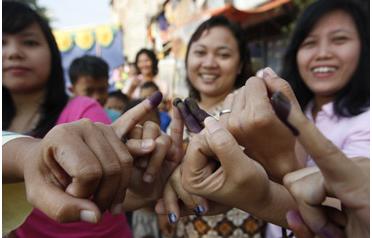
Polling stations opened first in the remote eastern region of Papua, where extra police and special forces were on standby after recent violence linked to separatists, but there were no reports of unrest during the short, five-hour voting window.
Other polling stations followed as the sun rose across the rest of the country, though there was little sense of excitement after weeks of opinion polls showing that President Susilo Bambang Yudhoyono is almost certain to be re-elected.
If Yudhoyono, who is popularly known by his initials "SBY", gets more than 50 per cent of the vote from an electorate of some 176 million voters there will be no need for a September run-off with his closest rival.
A clear picture of the result could emerge by around 2pm (0700 GMT) on Wednesday, two hours after the polls close, as "quick count" results pour in.
Analysts expect that in a second term Yudhoyono would quicken the pace and widen the scope of reforms in Southeast Asia's biggest economy to attract badly needed foreign investment, create jobs and shore up flagging economic growth.
"I am ready to vote for SBY because of his national agenda. He is more competent," said Andreas Pigai, a civil servant in Puncak Jaya, central Papua.
The streets of central Jakarta, normally choked with traffic, were quiet with a few police standing watchfully at key intersections and close to polling stations.
In Manado, the capital of North Sulawesi, there was no repeat of the protests triggered by problems with the electoral rolls in April's parliamentary elections and the streets were quiet.
"I am here today to vote for a president who is competent, committed to the people, God-fearing and uncorruptible," said Manado resident Olivia Rorimpandey, who refused to say which way she had voted.
VOTER LIST CONTROVERSY
A controversy over voter lists marred the run-up to the election with the teams of Yudhoyono's two rivals, former president Megawati Sukarnoputri and Vice President Jusuf Kalla, complaining about millions of duplicate names and even the names of dead people and children on the electoral rolls.
The barrage of complaints over flawed voter rolls may have fanned public doubt about the credibility of the process, and could make it easier for the losers to challenge the result, especially if it was close.
Megawati and Kalla adopted a more nationalist tone than Yudhoyono in their campaigns, promising to squeeze more from the country's rich resources to pay for pro-poor policies.
Kalla, who hails from the business elite, told reporters as he cast his vote in Jakarta that he had slept well, said a special prayer and was feeling confident. "Optimistic. Optimistic," he said, beaming.
A decade ago, Indonesia was the sick man of Asia. After 32 years of rule by Suharto, who oversaw a system of entrenched corruption and nepotism, it stood on the brink of political, social and financial collapse.
Yudhoyono's government has since brought political stability, peace and the best economic performance in a decade. Today, some see the country on another brink – of economic take-off and joining the emerging "BRIC" economies of Brazil, Russia, India and China.
US President Barack Obama, who lived in Indonesia as a child, is expected to visit the country later this year – a trip that would warm ties that both countries say they plan to raise to the level of "comprehensive partnership."
However, US trade officials and businesses complain about a range of protectionist policies, including judicial and bureaucratic bias favouring Indonesian firms, as well as rampant corruption that distorts the economic playing field.
Indonesian stocks, bonds and the rupiah have rallied this year on the prospect of a Yudhoyono win, and analysts see them rising further on hopes of a more robust reform drive if he wins in one round. If there is a surprise and Yudhoyono loses or it goes to a run-off, there would be a sharp market sell-off.
Keep up with the latest business news from the region with the Emirates Business 24|7 daily newsletter. To subscribe to the newsletter, please click here.