Turkmenistan steps up rhetoric in Russia gas row
Flows from Central Asia's top gas producer to Russia stopped on Thursday following a pipeline explosion which Turkmenistan said happened because Russia had abruptly cut gas imports. Russia says the accident would not affect customers in Europe.
"This accident happened due to a unilateral and egregious violation by Russian company Gazprom Export of agreements and rules of natural gas purchases," Turkmenistan's Foreign Ministry said in a statement issued in the early hours of Friday.
Gas trade is a sensitive issue in Russia's relations with other former Soviet republics, with supply rows often escalating into full-blown diplomatic stand-offs.
A Russia-Ukraine gas crisis cut supplies to Europe in the middle of winter this year, raising concerns about the reliability of Russian supplies.
As diplomacy intensified over Turkmen gas, Russian Foreign Minister Sergei Lavrov was due to visit the Caspian nation on Friday to attend a scheduled ministerial conference.
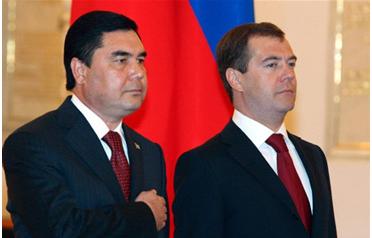
Lavrov will separately meet Turkmen President Kurbanguly Berdymukhamedov while in Ashgabat. A senior official from Russian gas monopoly Gazprom, Valery Golubkov, was also due to visit Turkmenistan on Friday.
Turkmenistan, a desert nation bordering Afghanistan and Iran, says Gazprom cut gas imports on April 8 without a warning.
Gazprom has not commented on the Turkmen accusations.
Analysts said however that Gazprom would benefit from a halt of Turkmen gas flows at a time when it is suffering from a slump in gas demand in Europe.
Gazprom normally cannot meet both its export obligations and peak demand at home without the Turkmen gas but the deepening financial crisis has changed the picture.
On Thursday, Gazprom said its output would fall 12 per cent this year and stay at low levels for a few more years, while oil firms, such as Lukoil have said Gazprom had asked them to trim production of gas in Russia.
The blast was the second major accident on the territory of the former Soviet Union this month. A pipeline explosion in Moldova, attributed to the age of the infrastructure across large stretches of the former Soviet Union, reduced deliveries of Russian gas to Romania, Bulgaria and Turkey.
Keep up with the latest business news from the region with the Emirates Business 24|7 daily newsletter. To subscribe to the newsletter, please click here.