Financial characters bring turn-of-century mystery alive
A spy doubling as a Barings banker, a courtesan posing as a countess and an arms dealer manipulating stock markets propel the plot of Iain Pears's sprawling tripartite mystery, Stone's Fall.
Yet the most compelling protagonist in this novel is money. Pears is best known for An Instance of the Fingerpost, a bestseller that meshed mathematics and early medicine with revolutionary politics in Restoration England. In Stone's Fall, he tells the story of late 19th- to early 20th-century capitalism through the rise and fall of one man, John Stone. Being Pears, he starts with the fall and works his way back in time to the rise.
The place is London, the year 1909. Stone, an arms maker and financier with the title of Lord Ravenscliff, is found dead, having tumbled from a window of his study. His will contains a surprise bequest of £250,000 (Dh1.5 million) to a child who nobody – least of all Elizabeth, his wife of 20 years – knew existed. So she hires crime reporter Matthew Braddock to track down the heir.
Braddock disguises his investigation as research for a biography of Stone. As he narrates the first part of the novel, the journalist eases the reader into the world of finance through his own clumsy attempts to understand it.
"Clearly this capitalism was a more complicated beast than I had thought," he groans. Though at first amusing, his incomprehension soon grows annoying. Braddock is such a nebbish that it never seems like he will get to the bottom of the mystery.
Almost half a century after he abandons his inquiries, Braddock receives a package containing two bundles of papers – memoirs that form the second and third parts of the book. One was written by a man named Henry Cort, the other by Stone.
Cort turns out to be a Barings bank employee who doubled as a spy. Working for the British government as a broker of military intelligence, he added in the 1880s a shrewd young streetwalker in Calais to his payroll of informants. When he next sees her, she's passing herself off as Hungarian countess Elizabeth Hadik-Barkoczy von Futak uns Szala, moving in lofty social circles and captivating the rich and powerful, including Stone.
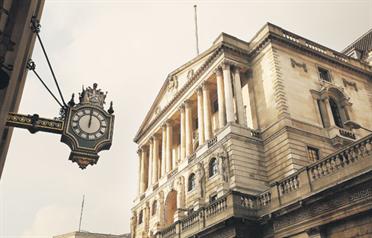
Cort's big moment comes when he gets wind of a plot to oust London as the world's financial capital by engineering a run on the Bank of England. Stone proves vital in averting the crisis and – no surprise given his access to inside information – emerges from the rescue all the richer.
In the third stretch of the book, Stone's memoirs take us even further back in time. The son of an English country curate and his Spanish wife, Stone comes into a moderate inheritance in the 1860s and sets forth on a Grand Tour of Europe.
In Venice, he meets a Scottish inventor who has sold his patent for a new weapon – the torpedo – to loan sharks. Stone pays off the debt and acquires the technology for just £273, and sets up the Gosport Torpedo Company.
Before the riddles of Stone's death and secret child can be resolved, the narrative slithers through a tangle of melodramatic twists, transporting us from anarchist meetings and shipyards to Parisian salons and seances. Blackmail and intrigue figure in the plot, as do murder, explosions and forbidden love.
But for all its abundance of action, it plods under the weight of Pears's research and Stone's motivation is hazy, while key themes languish.
Keep up with the latest business news from the region with the daily Emirates Business 24|7 newsletter. To subscribe to the newsletter, please click here.