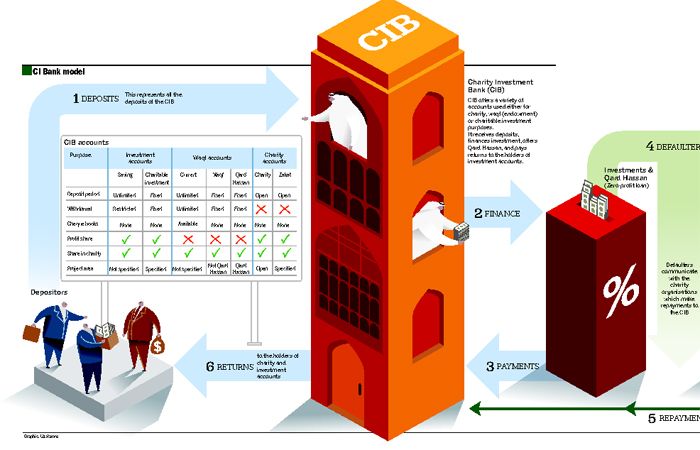
A charitable investment bank (CIB) funded by voluntary interest-free loans and philanthropic investments, including donations and zakat, should be set up to help the less well-off find work and improve living standards, according to an economist in the UAE. Dr Abdel Fattah M Farah, Economic Advisor to Ajman Chamber of Commerce and Industry (AJCCI), believes there is a great need for such a banking model. And the plan has been adopted by UAE social and humanitarian activist Mohammed bin Saeed Al Hilli, Chairman of the Green Crescent International Network, which is working to make the bank a reality. Dr Farah said that at present the rich paid their donations, zakat and almsgiving to charitable organisations, which in turn distributed the contributions in cash or kind to people who needed them. "Instead of distributing amounts to the poor, it is more important to offer them work opportunities and help them meet their needs sustainably," he added. "This is the idea behind having a charitable investment banking model." The bank would be Shariah-compliant and the returns of any investment could take the form of either profit or social benefit. "Both profit and benefit are recommended under Islam when the means used to attain them are ethical." He defined charitable investment as a profit-making process in a socially responsible project that was intended to eliminate poverty in poor societies. It should increase the supply of necessities, including food, shelter, drinking water and electricity, as well as building infrastructure and facilitating education and health services. "The socio-economic returns of charitable investments include increasing per capita income and raising standards of living for poor citizens, best utilisation of unemployed human and natural resources, reducing prices of necessities by increasing supply, expanding demand and finding new local markets for products and expansion of foreign trade. "Charitable investments will also help reduce violence, instability and terrorism, building good international commercial relations, leading towards technological transfer and advancement, funding stock markets with real shares thereby reduction speculations, and increasing investment, national income and flourishing the economic activity." Although the proposed new bank would be a charitable venture those funding it would be able to share in the profits if they chose particular types of account. The CIB model offers different types of accounts that suit the particular needs of the rich and those on limited incomes who wish to contribute to charitable investment projects. "The profit rate from charitable investments will not be exploitative and could be equal to or less than the normal rates prevailing in the market, depending on the nature of the product and the forces of supply and demand. "While market forces direct investors towards higher profit rates, the focus of a charity giver would be on attaining social benefits irrespective of the profit rates. "The profit from charitable investments is classed as charity because the investor willingly directs the investments towards non-usurious dealings. A high profit rate is not the best alternative for the investors, who value socially beneficial projects," said Dr Farah. He said the CIB model offered three types of account – investment, waqf (endowment) and charity. "In both investment and charity accounts the holder can share profits, whereas with the waqf accounts the holder cannot. In addition the model gives investors the option of contributing funds for a limited or unlimited period. "There are two types of investment account – savings and charitable investment. The deposit period for the savings account is unlimited, withdrawals are restricted, and the holder will not get a chequebook. "A charitable investment account holder can donate money for a specified period of time and withdrawals from this account are fixed at a certain level. No chequebook will be issued, profits can be shared and the project area where the amount will be invested should be specified," said Dr Farah. Under waqf there will be three types of accounts – current, waqf and Qard Hassan. The current account is suitable for every individual whether they are a businessman or have a limited income. Anyone can open a current account and enjoy all the benefits such as unlimited withdrawals and a chequebook. The difference is that the CIB model offers the holder of this account a chance to support a charity as the money in the account is considered a loan from the depositor to the CIB that can be used to support charitable ventures in line with his wishes. The waqf account will run for a fixed period and withdrawals will also be fixed and the holder will not have a chequebook. The money in a Qard Hassan account will be used only for the provision of loans. Loans granted under Qard Hassan should not produce profits. There are two types of account – charity and zakat – in the charity