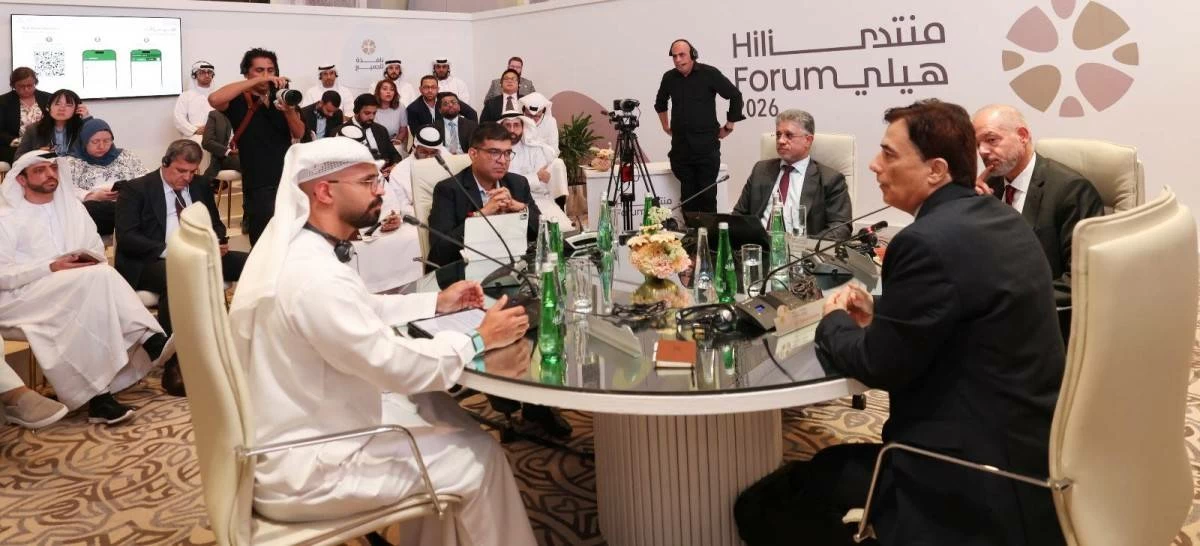
Hili Forum participants highlight Gulf's expanding role in shaping the global economy

Speakers say the Gulf's economic transformation, technology investments and strategic partnerships are creating new horizons for global cooperation and resilience

By Rasha Abdel Moneim Published: 2026-09-07T17:41:00+04:00 3 min read
Speakers noted that recent transformations across the region, including efforts to diversify economies, invest in advanced technologies and strengthen international partnerships, have created new opportunities for global economic integration and cooperation.

Abu Dhabi: Participants in the session "New Horizons: Gulf-Global Economic Cooperation" at Hili Forum 2026 highlighted the Gulf region's growing role in shaping the future of the global economy, stressing that Gulf countries have evolved beyond their traditional role as major energy suppliers to become influential players in infrastructure, investment, technology and global trade.

Speakers noted that recent transformations across the region, including efforts to diversify economies, invest in advanced technologies and strengthen international partnerships, have created new opportunities for global economic integration and cooperation.

They said Gulf-global partnerships are increasingly extending beyond conventional frameworks centred on trade and energy exports to encompass supply chains, food security and the green transition, positioning the region at the centre of emerging economic opportunities.

Economic transformation

Participants highlighted the Gulf's deliberate shift from dependence on oil revenues towards diversified economic models supported by national development strategies, with technology, artificial intelligence and renewable energy becoming key drivers of future growth.

Dr Bassem Kamar, Executive Director of Economic Policies at the Arab Monetary Fund, said the UAE's leadership in financial innovation and the adoption of advanced technologies position it to play a significant role in strengthening financial integration among GCC countries.

Trade and connectivity

The session also examined efforts to reshape supply chains and trade routes through investments in ports, logistics networks and alternative transport corridors.

Dr Christian Pauletto, Senior Adviser at the Office of His Excellency Dr Thani Al Zeyoudi, said the UAE is focused on building economic bridges across continents and strengthening ties with major commercial and financial centres in Asia, Europe, Africa and the Americas.

He said this approach reflects a vision of connecting the GCC and the UAE with the wider global economy.

Energy and food security

Participants described energy and food security as two fundamental pillars of international cooperation.

They noted the importance of maintaining stable energy markets while investing in carbon-neutral projects and building partnerships that support access to strategic commodities, including fertilisers and agricultural products.

Dr Ahmed Al Safty, Economic Adviser at the Emirates Center for Strategic Studies and Research, said current global conditions require both energy producers and consumers to strengthen resilience through diversification, strategic reserves and closer cooperation.

Strategic partnerships

Speakers also discussed the shift from transactional relationships towards broader strategic partnerships based on shared interests and innovation.

Anilesh Mahajan, Senior Deputy Editor at India Today, highlighted the Comprehensive Economic Partnership Agreement between the UAE and India, noting that bilateral trade now exceeds US$100 billion.

He described the agreement as a model for strengthening India's economic engagement with the Gulf and creating new opportunities through the combination of Emirati investment and Indian capabilities.

Resilience and stability

The session concluded with participants stressing the importance of economic independence and institutional resilience in an increasingly uncertain global environment.

They said Gulf countries are working to build economies capable of withstanding geopolitical shocks while directing investment towards high-value sectors.

Participants noted that regional stability has become closely linked to global economic stability, making resilience, diversification and strategic cooperation increasingly important priorities for the future.