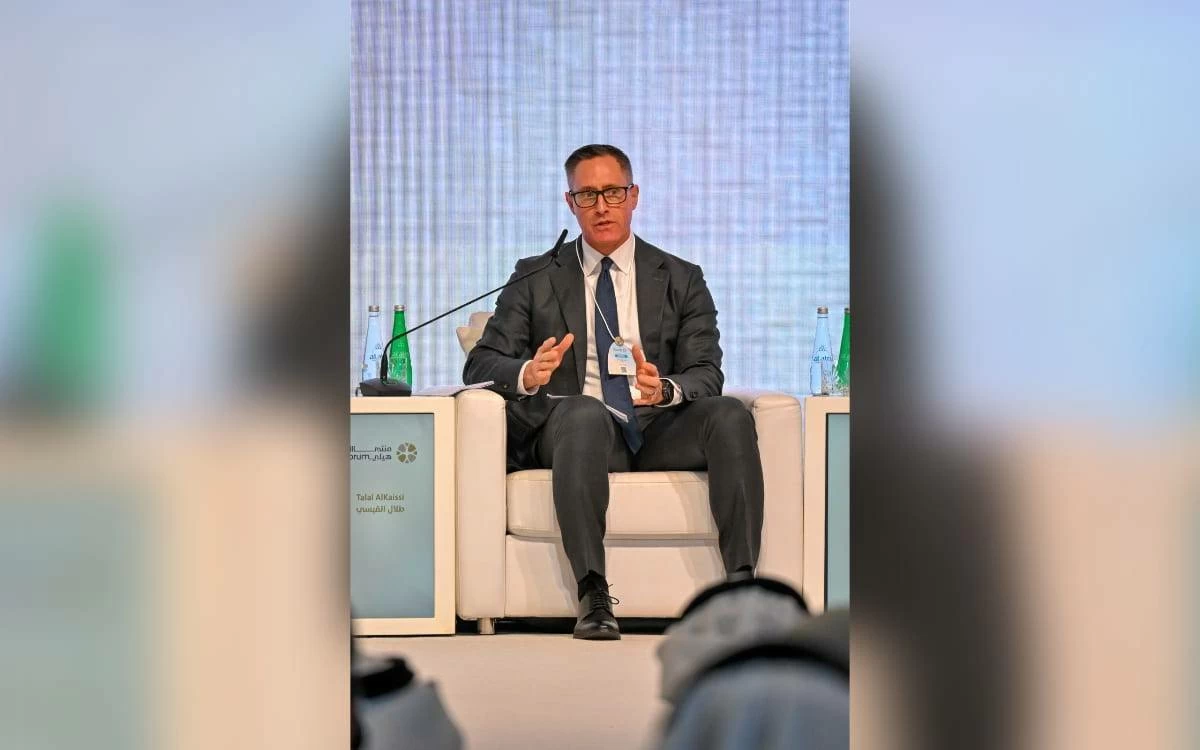
Lockheed Martin executive highlights UAE's cyber and air defence model at Hili Forum
Daniel Mouton says the UAE's experience demonstrates the importance of layered defence, data integration and strategic investment in technology and infrastructure

Abu Dhabi: Daniel Mouton, Vice President and Chief Executive Officer of Lockheed Martin Middle East, said the UAE's cyber and air defence experience has proven effective and could serve as a model for wider regional application.
Speaking during the session titled "Data and Drones: The Battle for Influence in the New Geotechnological Order" on the second day of Hili Forum 2026, Mouton said artificial intelligence has created both opportunities and challenges.
He noted that one of the most significant challenges arises when a country has to defend itself against up to 800,000 cyberattacks within a 24-hour period, describing it as an exceptionally high number of attacks.
Mouton said the overlap between the cyber and industrial domains lies in how artificial intelligence can help identify, classify and analyse attacks, while ensuring that humans remain the final decision-makers.
He pointed to strategic decisions taken by the UAE over many years, particularly in relation to preparedness and resilience. Referring to recent attacks, Mouton said that dealing with large numbers of threats requires multiple layers of defence and that countries cannot rely on a single defence layer, whether in physical security or cyber security.
According to Mouton, the UAE's approach involved multiple partners and multiple sources of capability. He highlighted the role of data-sharing and integration in helping decision-makers identify where interception and response measures should be applied, stating that the results demonstrated the effectiveness of this model.
Addressing the economics of defence, Mouton raised the challenge of responding to relatively low-cost technologies, such as drones, with systems that may be significantly more expensive.
He said one of the key requirements is the ability of sensors and systems to process information quickly enough to help operators distinguish between threats and make informed decisions.
Mouton said a similar challenge exists in the cyber domain, where operators must evaluate large volumes of information in a short period of time to determine which threats require an immediate response.
On the subject of sovereignty and technological development, Mouton said strategic independence can no longer be viewed solely through military, diplomatic or economic lenses.
He argued that recent conflicts have demonstrated that national resilience increasingly depends on digital infrastructure, communications networks, submarine cables, cloud platforms, satellites and artificial intelligence systems.
Regarding cyber threats and so-called "grey-zone" activities, Mouton emphasised the importance of a cooperative and diplomatic approach. He said effective cooperation requires countries to clearly define what information they are willing to share and where their national red lines lie.
He cited the example of a Gulf Cooperation Council working group on early warning that has continued through multiple US administrations, saying its longevity reflects the ability of participating countries to cooperate while balancing their individual priorities.
Mouton concluded that the UAE's success in strengthening its cyber and air defence capabilities provides an opportunity to explore how similar approaches could be adopted more broadly across the GCC.