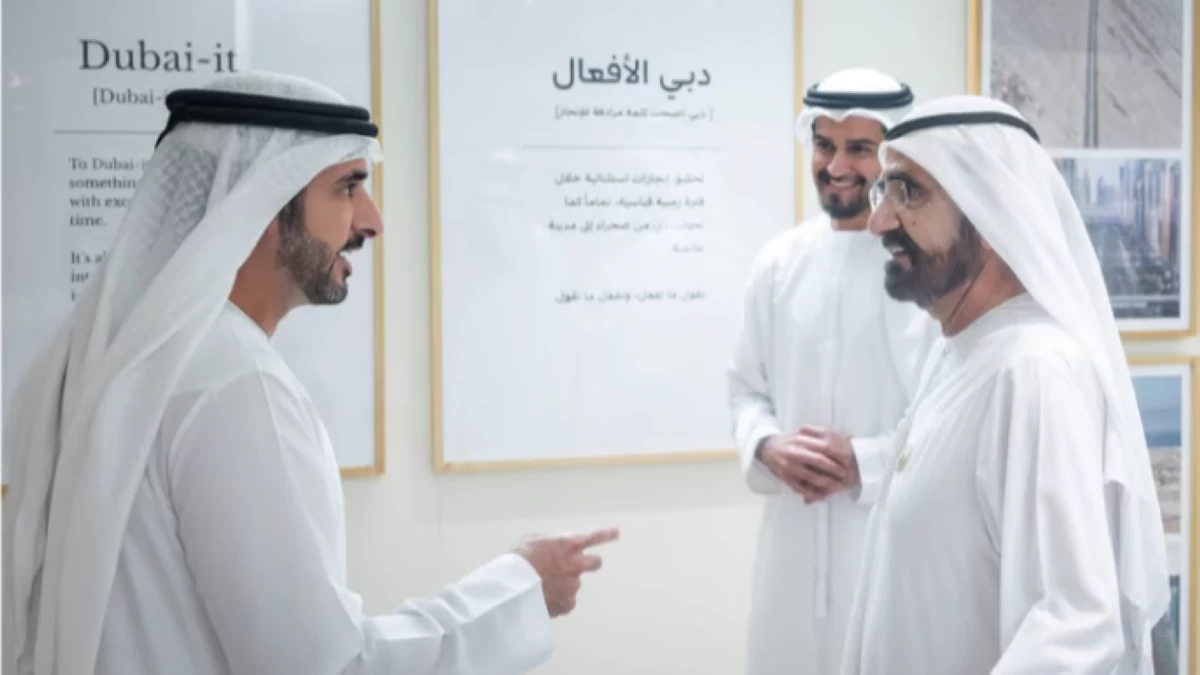
Mohammed bin Rashid to Hamdan bin Mohammed: A father’s letter to his son — a leader’s lessons to a leader
The letter is, at its heart, a reflection on leadership — a distillation of lessons gathered over decades of governing, managing and dealing with people

Some letters are written for an occasion. Others are written for a lifetime.
The letter Sheikh Mohammed bin Rashid addressed to his son, Sheikh Hamdan bin Mohammed, is more than a father’s words of pride and congratulations. It is, at its heart, a reflection on leadership — a distillation of lessons gathered over decades of governing, managing and dealing with people.
The letter comes as Sheikh Hamdan marks 20 years on September 8 since his appointment as Chairman of the Executive Council of Dubai.
It begins on a deeply personal note. Sheikh Mohammed tells Hamdan how proud he is of him, not simply because of what he has achieved, but because of his closeness to people and the affection they have for him. He reminds him, in effect, that leadership begins with being among people — sharing their occasions, understanding their lives and remaining accessible to them.
There is a powerful message in that: the value of authority does not come from its distance from people, but from its closeness to them.
But the letter soon moves beyond the father speaking to his son and becomes a leader speaking to someone who is assuming greater responsibility. With success comes greater responsibility — to the nation, to its people, to family and to the next generation. The more Hamdan achieves, his father reminds him, the more closely his work will be watched and judged.
Success, therefore, is not the destination. It is the beginning of a greater responsibility.
What makes the letter particularly significant is that Sheikh Mohammed does not give his son a political formula or an administrative manual. Instead, he offers something more enduring: lessons in leadership drawn from experience.
A leader must listen before judging, show compassion before punishment, ask questions before being asked, and reach out to people before they have to reach out to him. The language is simple, but the philosophy behind it is profound. Good government begins with listening, compassion and initiative.
The warning against injustice is equally clear. Injustice cannot endure, and the prayer of the wronged cannot be kept from reaching God. Justice, therefore, is not merely a legal obligation. It is a foundation of the stability, prosperity and standing of a state.
Then comes another important lesson: trust must be accompanied by accountability.
Trusting those around a ruler is necessary, but when trust becomes unquestioning loyalty and removes accountability, it can become a danger. That is why Sheikh Mohammed stresses the need for accountability and warns against corruption and favouritism. Those entrusted with responsibility should be chosen for their honesty and loyalty — not simply for what they say to the ruler.
Running through the letter is another deceptively simple idea: the real strength of a ruler lies not in the power he commands, but in the affection of his people.
History offers many examples of leaders who remained close to their people and earned a place in their hearts. Others lost that connection when they became distant or surrounded themselves with people who shielded them from reality.
And then comes the line that perhaps captures the entire spirit of the letter:
“The great man is not the one whom people serve, but the one who serves the people. Greatness does not belong to the one who holds power over people, but to the one who holds their hearts.”
It is more than a memorable phrase. It is perhaps the central lesson Sheikh Mohammed wanted to leave with his son.
Because ultimately, the letter is not simply about how to govern. It is about something more difficult: how to preserve the human being within the ruler.
To remain close to people. To listen before judging. To be just without losing compassion. To hold those around you accountable. And, above all, to remember that power is a responsibility before it is a privilege.
Perhaps that is the deepest lesson Sheikh Mohammed is passing to his son: that leadership is not measured only by what a ruler achieves, but by the person he remains while achieving it.
And that is what makes this more than a father’s letter to his son. It is one leader passing to another the wisdom of a lifetime — a reminder that behind every title, every office and every authority must remain a human being who never loses touch with the people he serves.
--
Abdul Hamid Ahmad is a UAE Writer and Columnist