Aussie dollar breaches parity with US for first time
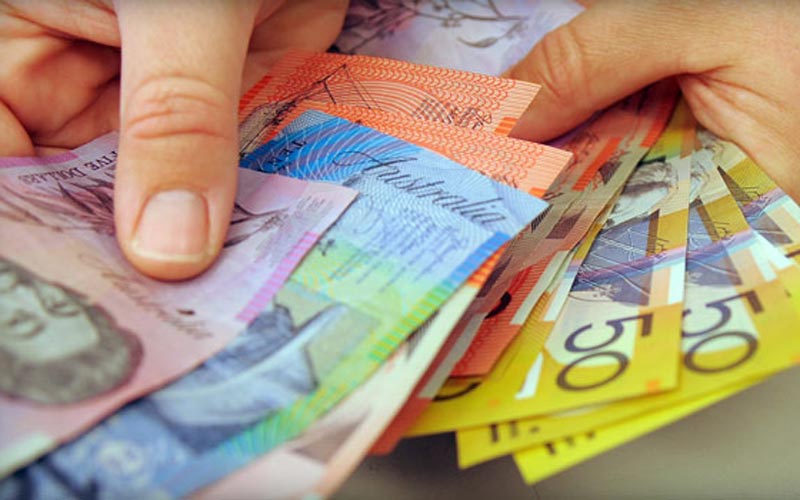
The Australian dollar punched through the 1.00 US dollar mark overnight for the first time since it was floated, as the greenback continues to comes under pressure and talk of a global currency war heats up.
The Aussie, as the currency is known, hit parity with the US dollar in London trade on Friday after Federal Reserve chairman Ben Bernanke indicated the central bank was ready for a fresh round of easing measures if needed.
The currency peaked at 1.0003 US dollars, its highest level since being floated in December 1983, before retreating moments later to 99.50 US cents.
Analysts had expected the Australian currency, which has been buoyed by an economy with annual growth at 3.3 per cent, rising commodity prices and its central bank's tightening stance, to reach parity before the end of the year.
The Aussie surged over the psychological 100 US cent barrier as a result of cluster of forces at work, including ongoing problems in the US and other advanced countries, said AMP Capital Investors chief economist Shane Oliver.
"The fall in the US dollar is a big chunk of it... but there's quite a lot more to it in that," he said.
He likened global currency tensions -- in which major economies such as the United States, European Union, Japan and China are striving to weaken their currencies to help exporters -- to squeezing a balloon, where pressure applied in one part of the world was felt elsewhere.
"So as there's downwards pressure on the US dollar, (and) the emerging world resists it to some degree, some of the selling pressure on the US dollar finds its way to commodity currencies like the Australian dollar," he told AFP.
The so-called "currency war" was giving the Aussie "a leg-up", he said, but the big picture driver for the surging Australian dollar -- which has risen more than 20 percent against the US dollar since June -- was the ongoing downwards pressure on the greenback.
He said the Aussie had the added benefit of a non-interventionist central bank and the surging of commodity prices for exports such as iron ore, copper, gold, wheat and sugar over the past 18 months.
"Australia is seen as an attractive place for people to put their money," he said.
"Australia has gone from being perceived as a sort of an old economy dominated by cowboys, which was the perception around through the '80s, to a well-managed economy with exports that are in strong demand."
Fears of a global currency war mounted Friday after Japan voiced concerns about wild forex movements and China said the US should not use the yuan as a "scapegoat" for its economic woes.
Japan's Prime Minister Naoto Kan expressed concern about the currency situation after the yen hit a 15-year high against the dollar on expectations the US would soon announce economic pump-priming measures.
The US Federal Reserve's expected easing measures are aimed at boosting the world's biggest economy, which many in Washington say is being hampered by an undervalued Chinese yuan.
But Beijing, which has rejected calls for a quick yuan revaluation, said the yuan's weakness against the greenback must not be used as a "scapegoat" for Washington's problems.
As countries move to dampen their currencies to ensure their exports do not become too expensive, the issue is set to dominate a Group of 20 summit of the world's top economies next month.
In a conciliatory move, the US Friday delayed publishing a report on China's currency practices, which could have labelled China a currency manipulator, until after the key mid-November summit.