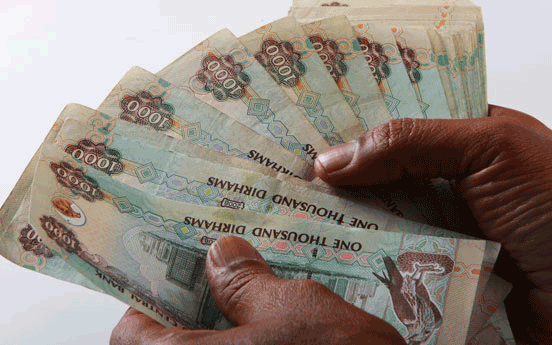
Higher crude prices will ally with an increase in oil production to boost the UAE’s economy by around 3.3 per cent this year and growth is projected to pick up by nearly 4.2 per cent in 2012, according to a Kuwaiti bank The UAE’s economy, the second largest in the Arab World, is also expected to gain nearly $62 billion in current prices this year to climb to its highest level since the country was created 40 years ago, Global Investment House (GIH) said in a 40-page study on the GCC economies. Strong crude prices will also push the economies of the six-nation Gulf Cooperation council (GCC) by around 7.8 per cent in real terms in 2011 while their budget and current account surpluses will largely expand. In current prices, the GCC economies are projected to gain more than $300 billion this year and the bulk of the increase will come from Saudi Arabia, the UAE and Qatar, the study said. The report showed real combined GDP in the GCC, which controls over 40 per cent of the world’s proven crude wealth, would pick up by nearly 7.8 per cent in 2011 from 4.1 per cent in 2010 and as low as 0.4 per cent in 2009. Saudi Arabia’s GDP, the largest in the Arab world, is expected to swell by nearly 6.5 per cent this year and around 4.9 per cent in 2012 while that of the UAE will expand by 3.3 per cent in 2011 and 4.2 per cent in 2012. Growth in 2011 was put at 5.3 per cent in Kuwait, around 3.1 per cent in Bahrain and about 4.4 per cent in Oman. Qatar’s gas-based economy will roar ahead by nearly 20 per cent, one of the highest growth rates in the world. “Growth in the GCC is projected to reach 7.8 per cent in 2011 as crude production expands to stabilise global oil supply in the face of supply disruptions elsewhere….non-oil growth is set to accelerate by more than one percentage point to around 5.3 per cent,” the report said. “Non-oil growth is expected to remain robust across regional countries with the exception of Bahrain because of prevailing uncertainties.” In current prices, the GCC’s combined GDP will leap by 29.3 per cent to a record high of $1,402bn in 2011 from $1,084bn in 2010, GIH said. Saudi Arabia’s GDP will rise by around $135 billion to $578bn from $443bn while that of the UAE will soar by $62bn to hit an all time high of around $363bn from nearly $301bn. The report showed Kuwait’s GDP would expand by $41bn to $172bn from $131bn while Qatar’s economy will race by nearly $65bn to $194bn from $129bn to surpass Kuwait’s GDP for the first time. Oman’s GDP is expected to gain $11 billion to reach $66bn from $55bn while that of Bahrain will widen by $4bn to $26bn from $2bn. The report showed an expected rise in oil output and prices to an average $107 a barrel from $79 in 2010 would largely widen the GCC’s combined fiscal surplus to nearly $162.8bn this year from $83.4bn in 2010. It projected their combined revenue at around $548 billion in 2011 compared with $440bn in 2010 while expenditures were forecast at nearly $389bn compared with about $294.4bn in the same period. A breakdown showed Saudi Arabia would record the highest fiscal surplus relative to its GDP as it is projected at 19.6 per cent in 2011. The report estimated the surplus at 16.1 per cent in Kuwait, 13.4 per cent in the UAE, and 10.2 per cent in Qatar. It expected the balance to be negative at around four per cent in Bahrain and 3.8 per cent in Oman. The study also expected high oil export earnings to boost the GCC’s combined current account surplus to nearly $304bn in 2011 from $136bn in 2010. “Furthermore, the current account to GDP is expected to increase to nearly 21.7 per cent in 2011 compared to 12.5 per cent in 2010.”