Shortage of Shariah-compliant realty financing in UAE
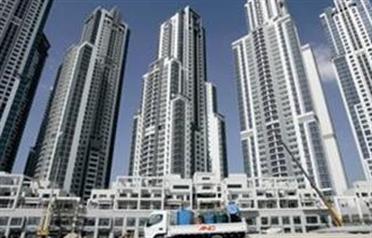
There is a shortage of Shariah-compliant real estate financing in the market as Amlak and Tamweel are not lending because of the liquidity crisis, say real estate experts.
"Islamic funds for developers and end-user property purchasers have become scarce with the two Islamic institutions not providing funding," said Sohail Zubairi, CEO of Dar Al Sharia Legal & Financial Consultancy, a subsidiary of Dubai Islamic Bank.
"This is forcing those in need of funding to approach Islamic banks for whom real estate financing has never been a core activity in the same way it was for Amlak and Tamweel."
Markus Giebel, CEO of Deyaar Development, said: "The end-user market is hurting now and the demand from new buyers is limited. The liquidity issue is a global concern and not a Dubai phenomenon."
"Developers today need to put all their efforts into safeguarding the interests of their customers even if it means changing their payment plans."
Zubairi said the disappearance of liquidity from the country's financial system had affected Islamic financial institutions (IFIs) as well as conventional ones.
"Islamic financing is based on the availability of liquidity and is invested as equity rather than as a loan with interest," he added.
He called for government authorities to develop a capital adequacy ratio for Islamic banks in consultation with their managements and Shariah boards. This would enable Islamic banks to free up considerable amounts of liquidity in their systems, which would be helpful in the current situation.
"The IFIs are governed in the same manner as the conventional banks, despite their business model being radically different," he added. "With an Islamic bank the depositors invest equity, which is in contrast to conventional banks where depositors lend the money to the banks."
And he said Shariah-compliant developers were no different from conventional ones when it came to the impact of the slowdown on the real estate sector.
"Liquidity is a challenge for Islamic financiers in the same manner as it is for conventional lenders since both types of financial institutions operate in the same market environment."
Robert McKinnon, Managing Director of Al Mal Capital, said the main driver for developers was the demand in the real estate sector.
"I don't see an advantage for Shariah-compliant developers or much of a difference in the market risk for either kind of developer," he added.
Abdul Aziz Al Awar, CEO of Mada'in Properties, said: "A Shariah-compliant developer is no different from a conventional developer and the current economic conditions has affected everyone in the real estate sector.
"Financing has been tight across the board. However a Shariah-compliant company may be in a better situation to obtain funding when Islamic banks start offering finance again."
Giebel said: "With regards to financing, bigger developers with the backing of established groups and a healthy balance sheet always have access to different sources of financing.
"Deyaar, as a leading Shariah-compliant developer, is backed by its founding company and majority shareholder, Dubai Islamic Bank. We have secured Shariah-compliant funding to execute all of our existing projects. It is our belief that in these times Shariah-compliant funding has an advantage as the principals guarantee fairness and stability."
Zubari said: "In Dubai, Islamic banks have become very selective and seek higher down-payments, in some cases up to 50 per cent compared with the pre-crisis level of five per cent."
And Al Awar said: "As the public begins to understand the benefits of Shariah financing there will be more demand for financial institutions and other organisations to introduce and promote Islamic funds. We believe once the public is made more aware of this form of financing demand will grow. This sector of the finance industry has a great future."
Zubairi said the refinancing of off-plan and completed properties has been partly responsible for the current deterioration in the financing-to-value ratios offered by IFIs.
"Refinancing has an element of greed in it, which has severely undermined the portfolios of IFIs. I hope the IFIs do not go near refinancing of properties once the situation gets back to normal," he said.
The developers agreed that Shariah-compliant financial products offered benefits to the real estate sector. Giebel said: "Islamic products offer some real benefits to both customers and developers looking for security and Shariah-compliant investment practices. Customers generally select products based on their needs and whether the service and product features are beneficial to them."
"The Middle East, and especially Dubai, has been emerging as a strong centre for Shariah-compliant products and services that have been very successful. There is definitely a lot of potential for the market to absorb more innovative products that are aligned to globally accepted Islamic principles."
Zubairi said that according to Shariah principles, Islamic developers should not charge penalty interest if purchasers have to delay payments due to reasons beyond their control.
"However, they can levy a delay penalty as a deterrent for non-genuine defaulters, provided the payment is donated to charity and not included in developers' income stream. Furthermore, all contracts entered into by the Islamic developers, whether for sale, lease or managing, must comply with Shariah principles and be vetted by the Shariah board," he added.
"In the pre-crisis scenario the most popular product was forward Ijara or leasing whereby the IFI would purchase the off-plan property from developer and lease to its customer under the forward lease agreement.
"Being the purchaser, the IFI would pay the purchase price to the developer and start the lease upon getting the delivery to the property. The lease rent would comprise of a part of the cost of the property and the bank's return [usually based on a floating benchmark]. Upon successful completion of the lease term, the title to the property would be transferred by the IFI to the client."
Another popular structure used for short-term ready property financing is Murabaha, where the IFI purchases a property from the developer or secondary market and sells it to the client at a price that includes the IFI's cost plus a fixed profit amount.
Shariah developers called for the launch of more Islamic products. "Shariah has strict financial guidelines that would be welcomed considering the current economic situation," said Al Awar.
"Being a Shariah-compliant company does not make us immune from the impact of the world economic crises. However, we strongly believe that we are in a great position to continue to grow our customer base.
"We are finding that now more than ever the customer is looking for a strong, committed and trustworthy developer to invest their funds and to enter into a sales purchase with. Our foundations are solid we have prominent Islamic Banks as shareholders. Our company is focused on our customers and we pride ourselves in working with our customers during these troubled times.
"We have always attempted to do business on a win-win basis with our customers so that we grow and achieve a positive outcome for all parties associated with Mada'in Properties."
He said Mada'in was profitable in 2008 and had developed a strategic plan to deal with the crisis for 2009.
"However, we will concede that our profit in 2009 will not be as much as it has been in previous years."
Giebel said despite challenges facing the global financial markets and the real estate sector worldwide, Deyaar had continued with consistent growth by focusing on its core competencies and managing its resources in line with changing market requirements.
WHAT DO YOU THINK? Have your say by posting a comment below, or emailing us at [email protected].
Keep up with the latest business news from the region with the Emirates Business 24|7 daily newsletter. To subscribe to the newsletter, please click here.