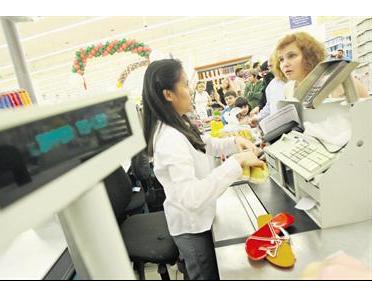
Accessibility to Radio Frequency Identification – or RFID – technology is expected to add strength to the growing retail market. The technology, its application and potential will be on display at a two-day conference and exhibition, which will be held in Dubai in October. As the UAE's marketing and retail sector grows, expecting about 200 per cent increase in retail space by 2010, product tracking and identification technology using RFID is set to come to the rescue, ensuring customer satisfaction, while reducing the pressure to increase efficiency. An information revolution in the form of RFID will help optimise performance in areas ranging from business intelligence to customer care. RFID technology could usurp the ubiquitous bar code's quarter-century of quiet domination. Not only can RFID tags be read faster than bar codes, but they can also carry more information, which helps to recall items more efficiently. Seven sites of Dubai public libraries have implemented the RFID technology and library branches under construction are expected to implement it as well. More than 300,000 library material, including books, videos, CD-ROM's and others are being tagged and programmed with RFID tags. The system has achieved automation flow of library holdings, facility of library circulation process [check in/out] as well as saving effort, time and money, especially in stocktaking. And that is only the tip of the iceberg in terms of the usage that RFID technology can be put to. The major use of the technology is easily expected to be in the marketing and retail spheres. Major United States retailers such as Wal-Mart, along with counterparts from South America and Europe, have started implementing the system with success, investing heavily in the technology to improve supply-chain efficiency and track products from the warehouse to the consumer's doorstep. According to the Aberdeen Group, a US-based international provider of business-related research services, two thirds of 1,100 surveyed companies utilising RFID will be measuring, tracking and linking all information upstream to the supply partners by the beginning of the next year A recent survey released by the Aberdeen Group showed that best-in-class marketing organisations have achieved an average of 12 per cent increase in customer satisfaction during the past two years, due to reduction of waiting time. Retail outlets have also reported a 25 per cent reduction in out of stock incidents. The technology has also become the favoured tool in the hands of marketers in tracking consumer trends closely. RFID is an automatic identification technology that has come a long way from the Second World War days when it was used by the Allied forces to detect and differentiate between enemy aircraft and their own. Sectors as diverse as retail, logistics, manufacturing, transport, petrochemicals, pharmaceuticals, oil and gas and healthcare are now using this technology to increase their efficiency. This automated electronic solution eliminates error-prone manual data entry, provides movement history, instant and accurate visibility of inventory levels and custody status at each stage of the supply chain as well as increased efficiency. The system can reduce the amount of time inventory sits in the distribution centre by five full days. It can be used initially to automatically record goods received and record the contents and verify the accuracy of outbound shipments bound for stores. A two-day Arab RFID 2008 conference will be held from October 12 to October 15 in Dubai, organised by the International RFID Business Association (RFIDba), a not-for-profit trade association serving end-users with guidelines, programmes and standards for RFID education, training and certification. The event will introduce and explain various applications and benefits of RFID technology, which is of special relevance to the market.