Relying on a Solar Impulse
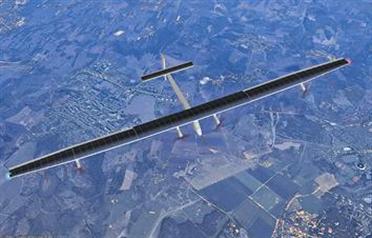
The man who made world history by completing the first non-stop circumnavigation of the earth in a balloon is set to make history again, by flying day and night in a solar airplane.
On June 26, Bertrand Piccard will make a 36-hour test flight (equivalent to a complete day-night-day cycle) in a sun-powered airplane without any other back-up fuel. If all goes well on that day, the 51-year-old will take off from Dubendorf airfield in Switzerland along with his business partner and co-pilot André Borschberg.
Emirates Business found out more about this amazing aircraft and the historical attempt.
Piccard is doing this to demonstrate the immense potential of renewable energies and the energy efficiency that new technologies are offering. The project's success will lie in achieving hitherto unknown levels of performance, obtained by combining practical experiment and complex computer simulations. The inspiration for the Solar Impulse aircraft project came after the record breaking 19-day, 21-hour and 47-minute balloon flight in March 1999. On landing in the Egyptian desert Piccard realised that just 40kg remained of the 3.7 tonnes of the liquid propane with which he had taken off from Château d'Oex in Switzerland. Realising that a lack of fuel could have doomed the adventure, he promised to himself to repeat his circumnavigation of the world, but this time without fuel or polluting emissions. From this promise the project was born.
Piccard said: "When we did the non-stop flight around the world in a balloon in March 1999, the circumnavigation was an end in itself. It was simply a means of going further, a step allowing me to commit myself more actively to the environment. Now, when I look back at it, the outcome is the Solar Impulse solar aircraft project."
The challenges before Piccard were great. To make an airplane take off and fly under its own power, fly both day and night, entirely propelled by solar energy, and in so doing, take a step nearer to perpetual flight, without fuel or pollution was something that had never been done before.
It was an unachievable objective, unless current technological limits could be pushed back.
In 2003 Piccard, who is a psychiatrist, aeronaut, lecturer and a United Nations goodwill ambassador, teamed up with Borschberg to officially launch the Solar Impulse project and start building a revolutionary aircraft. And 67 per cent of the €70 million (Dh349m) budget for the project is already pledged, taking the company to the completion of the first phase, ie construction and testing the first prototype.
Piccard said: "It is high time to reconcile the environment and finance in a single 'ecomanist' vision. For this, ecology and economics have to join forces and come up with profitable solutions to reduce both energy consumption and man's impact on nature."
Now, 10 years after the historic balloon flight, Solar Impulse is close to fulfilling that dream by putting into the air a plane able to fly both day and night, propelled only by solar energy. Work on the first prototype, the HB-SIA, began in June 2007. The HB-SIA is an outsized machine in relation to its weight – 61-metre wingspan and 1,500kg weight. The wingspan is comparable to the Airbus A340 and is in order to minimise induced drag and to provide maximum surface area for the solar cells.
The challenge that HB-SIA faces, are many. From the solar energy panels to the propellers, the plane needs to optimise the various links in the propulsion chain, respond to altitude factors that are hostile to both materials and pilot and combine the constraints of weight and resistance with the requirement to be ultra lightweight.
With the current solar technologies available each square metre of photovoltaic cells can provide the propeller with just 28 watts of continuous energy – the equivalent of an electric light bulb – over a 24-hour period. So how can a plane fly with the energy consumed by a supermarket window?
Drawing extensively on new technologies, the Solar Impulse engineers have developed an aircraft that is totally new in terms of aerodynamics, structure, building methods, propulsion and area of flight.
A total of 12,000 photovoltaic cells in 180 micron mono-crystalline silicon have been selected for their capacity to combine lightness and efficiency. The plane is constructed around a sort of skeleton in a carbon fibre honeycomb composite using a sandwich structure. The undersides of the wings are covered with flexible film and the upper surface with a skin of encapsulated solar cells. And 120 carbon fibre ribs, placed at intervals of 50cm, profile these two layers and give the body aerodynamic shape.
Under the wings are four gondolas, each containing a motor, a polymer lithium battery consisting of 70 accumulators, and a management system controlling charge/discharge and temperature.
The thermal insulation has been designed to conserve the heat radiated by the batteries and keep them functioning despite the -40°C temperature encountered at a height of 8,500m. Each motor has a maximum power of 12hp. The average engine power provided by the sun over a 24-hour period is comparable to that of the first Wright brothers' airplane in 1903 (12hp).
A gear box limits the rotation of each 3.5-metre diameter, twin-bladed propeller to 200-400 rpm. The on-board computing system gathers and analyses hundreds of flight management parameters, giving the pilot information he can interpret for making decisions, transmitting key data to the ground team and providing the motors with optimal power for the particular flight configuration and battery charge/ discharge status. In this way the plane can self-correct and minimise its energy consumption.
Never before has an aircraft been constructed with such large dimensions and yet remained so light, and never before has a system of propulsion been perfected to such a level of efficiency.
Even though the aircraft has been designed using the most sophisticated means, this is a "rough" prototype. Its maximum altitude is intentionally limited to 8,500m, to avoid the encumbrance of a pressurised cabin and to reduce instrumentation to the bare minimum. This is a first approach at optimising the relationship between energy consumption, weight, performance and controllability.
Solar Impulse is a revolutionary concept, which, if successful, is going to push back the limits of our knowledge of materials, energy management and human-machine interface. This first airplane is intended to check the working hypothesis in practice and to validate the selected technologies and construction processes.
If the first day and night flight on June 26 is a success, a second aircraft will then be developed, which will attempt to fly several 24-hour cycles, ending with the crossing of the Atlantic in 2011, followed by the first round-the-world flight.
Fact sheet
- Maximum altitude 8,500 metres
- Thermal constraints +80°C to -45°C
- Maximum weight 1,500 kg
- Average speed 70kmph
- Wingspan 61 metres
- Wing loading 8kg/m2
- Engine power maximum 30kw in total
- Cockpit is not pressurised