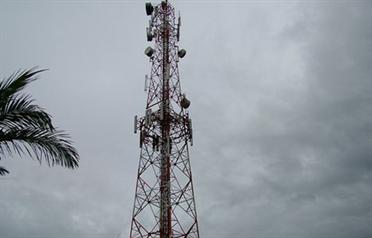
Telecom operators in the Middle East and Africa can save up to $8 billion (Dh29.4bn) in capital expenditure if they follow the global trend and share infrastructure, a private equity firm has said in a new report. There are an estimated 200,000 telecom towers in the MEA region and this number is expected to increase by 50 per cent to 300,000 in the next five years, according to research by Dubai- and Johannesburg-based Delta Partners, which manages a $80m private equity fund focused on the telecommunications, media and technology sectors. Tower sharing has been one of the telecoms industry's global hot topics for close to a decade. The first wave was seen in the US and Europe, while recently, India has witnessed several multi-billion dollar asset carve-outs. With some exceptions, the MEA region has been relatively quiet with respect to infrastructure-sharing deals as operators believed coverage advantages outweigh the benefits of sharing. Tower-sharing initiatives are already taking place in markets such as Saudi Arabia, the UAE and Iran and should continue to play a more significant role in the coming months and years, the firm said. Delta Partners expects activity to heat up in the next 12 to 18 months with multiple deal announcements. "The timing of these expected sharing deals is linked to several strategic dilemmas that regional mobile operators are currently facing. The first and foremost driver is compression of margins due to increased competition and decline in price-levels," Delta said in its report. "Operators in the Middle East are battling market liberalisation amid fully saturated markets, while in Africa mobile operators in many markets are facing 'hyper competition' due to the issuance of fourth and fifth licences." The second related driver is decline in customer profitability as operators penetrate the "bottom of the value pyramid", it said. "Operators are being forced to find new ways to enhance margins but still be able to support lower value customers." "The third and final key driver is the rationalisation of capex budget due to tightened financing in the current economic climate. Regional operators are starting to look at ways they can reduce future capital expenditure but also unlock cash from their existing balance sheets to finance future projects." According to Delta, sharing brings many benefits to emerging markets. "Not long ago in more developed markets, telecoms operators considered network related infrastructure as their core lever for sustainable competitive advantage. However, as markets liberalised and competition heated up, their networks eventually became more of a commodity. "Thus, mobile operators shifted focus to other elements of their value proposition to differentiate and create value for their customers. This allowed operators to take advantage of many of the strategic and financial benefits linked to tower sharing, including reduced future capex, lower operating costs, and potential capital gains if towers are sold to a third party." While some of these lessons still apply in emerging markets such as Africa, other factors make the case even more compelling, the consulting and investment firm said. One of the key differences in Africa is the wide dispersion of average income levels between nations. Since operators have "cherry picked" the most lucrative regions to roll-out networks, the profitability of newer roll-outs is not as compelling, it said. "This is combined with the fact that remaining rollouts are often in difficult and expensive to reach rural areas. These factors are currently forcing regional operators to seriously evaluate tower-sharing options." Delta Partners estimates that in MEA, $8bn could be saved over the next five years in cumulative tower-related capex if a site sharing index of 2.0 can be achieved on the newly rolled out towers. A further $1bn operating expenditure saving on new towers can be achieved by 2013. "However, this number could even be higher if existing tower portfolios are rationalised and shared," it said. Carve-Outs Once an operator has decided which network elements to share, the next question to answer is who will own the shared assets. According to Delta Partners, there are three basic models: engaging in tower swaps; setting up joint ventures with other mobile operators; and outsourcing tower assets to independent tower management companies. Tower swaps involve the simplest form of tower sharing between operators. This model involves a "like for like" swap of access to towers between two operators in the same market. Each operator maintains ownership and control of their towers. This model typically only allows for savings on a very small percentage of the overall tower portfolio and full value is not extracted, Delta said. At the moment, tower swaps are actually being executed in MEA but on a selective basis in certain countries. The second option is to create an "operator-owned" tower company as a separate entity, whil