Call for second stimulus package in United States
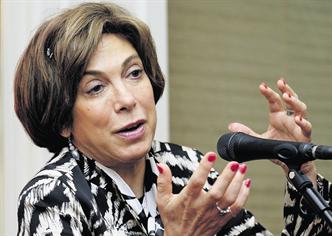
The United States should be planning for a possible second round of fiscal stimulus to further prop up the economy after the $787 billion (Dh2.89 trillion) rescue package launched in February, an advisor to President Barack Obama said.
"We should be planning on a contingency basis for a second round of stimulus," Laura D'Andrea Tyson, a member of the panel advising President Barack Obama on tackling the economic crisis, said yesterday.
Addressing a seminar in Singapore, Tyson said she felt the first round of stimulus aimed to prop up the economy had been slightly smaller than she would have liked and that a possible second round should be directed at infrastructure investment.
"The stimulus is performing close to expectations but not in timing," Tyson said, referring to the slow pace at which the first round of stimulus had been spent on the economy.
Tyson, who is a dean of the Haas School of Business at University of California, Berkeley and was also a White House economic advisor to former US President Bill Clinton, said an additional factor affecting the stimulus plan was that the economy was in a far worse shape than the administration had earlier estimated.
Tyson dispelled concerns about the ballooning US fiscal deficit that is estimated to hit nearly 10 per cent of gross domestic product, and its possibly devastating inflationary consequences.
"The Federal Reserve is not going to allow the United States to inflate away its debt," she said.
Answering a query about the value of the dollar, Tyson said the market was wrong to be concerned about inflation in the US economy, given the amount of slack in most industries.
"It is almost in no one's interest to have a sharply spiralling downward dollar," she said.
The dollar ought to decline in the longer term on a trade-weighted basis but she did not anticipate a sharp and sudden decline.
Turning to the Federal Reserve's near-zero rates policy and credit easing, Tyson said inflationary expectations remained "well-grounded", giving policymakers some space to pursue these expansionary policies.
She said she was also not worried about whether the Fed can exit such a policy.
"The Federal Reserve has the ability to make rapid adjustments in its balance-sheet as necessary."
But Tyson said the combination of near-zero interest rates and heavy debt issuance would keep the US yield curve steep. And, while the rate at which the economy was contracting had fallen, the latest jobs data showed the economy was still not stabilising.
Keep up with the latest business news from the region with the daily Emirates Business 24|7 newsletter. To subscribe to the newsletter, please click here.