India central bank holds rates, targets growth
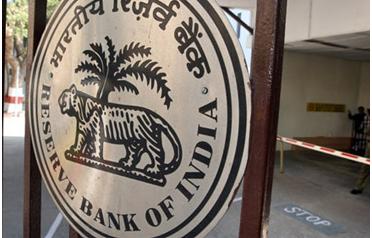
Early market reaction was muted, with the yield on the 10-year bond holding steady as the central bank increased its outlook for wholesale price inflation for the year that ends in March to 5 per cent from an earlier 4 per cent target.
"It is worth reiterating that the Reserve Bank will maintain an accommodative monetary stance until there are definite and robust signs of recovery," it said in its review, giving no time frame for when it will step back from that stance.
The Reserve Bank of India left its gross domestic product forecast for the current fiscal year unchanged at 6 per cent, but with a bias to the upside.
"The overall macroeconomic scenario continues to be uncertain although it is expected that the fiscal and monetary stimulus measures will boost domestic demand in 2009/10. On balance an uptrend in the growth momentum is unlikely before the middle of 2009/10," the central bank said in its quarterly statement.
The Reserve Bank of India (RBI) left its lending rate steady at 4.75 per cent, its lowest in nine years, and its reverse repo rate, at which it absorbs surplus cash from the banking system, unchanged at 3.25 per cent.
Both the rates, introduced in 2000, were last cut by 25 basis points in its April review. The RBI also kept the cash reserve ratio (CRR), the amount of funds banks have to keep on deposit with it, unchanged at 5.00 per cent. It was last cut by 50 basis points in January.
Asia's third-largest economy grew 6.7 per cent in the last fiscal year ended March after expanding by 9 per cent or more in the previous three years. Private sector economists expect growth between 5.8 and 7.2 per cent this year.
Wholesale prices are below last year's levels, largely as a result of oil prices retreating from their all-time peaks reached in July 2008. But they have been rising since March as food and oil prices have started to creep up, while consumer price inflation hovers near 8 per cent.
India's fiscal deficit is on track to reach 6.8 per cent this year, its highest level in 16 years, with the government set to borrow a record 4.51 trillion rupees ($94 billion; Dh345 billion) in 2009/10, roughly three times last year's borrowing.
The RBI urged a return towards fiscal consolidation.
"Large fiscal deficits if continued strictly beyond the recovery period, can crowd out private investment and trigger inflationary pressures," it said.
Analysts polled by Reuters last week expected the central bank to hold key rates steady as growth begins to show some signs of revival while concerns about rising prices were seen deterring further cuts.
Of 25 analysts polled, 22 expected no change in the key repo and reverse-repo rates, and three said the RBI may cut both rates by 25 basis points.
The RBI has cut its short-term lending rate by 425 basis points since October. The reverse repo rate, at which the central bank absorbs surplus cash, has been cut by 275 basis points in four steps since December.
Keep up with the latest business news from the region with the Emirates Business 24|7 daily newsletter. To subscribe to the newsletter, please click here.