False dawn for Europe's lost cup
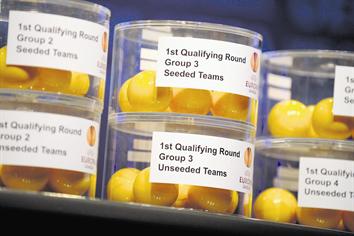
The name may have been changed, the format might have been altered, but doubts still remain: can the Uefa Europa League again become a competition respected by Europe's top clubs?
The tournament, recognised as the Uefa Cup for the past 37 years, had diminished in worth through the late 1990s and found itself increasingly undermined by the success of its wildly ostentatious relative, the Uefa Champions League.
The decision to expand Europe's premier club competition to 32 teams in 1992 – it was initially designed as a straight knockout format, contested by the champions of the eight strongest leagues – impacted the Uefa Cup significantly, as it was left to become the focus of the continent's less-celebrated clubs.
The glitterati who have dominated the competition, such as Real Madrid (1985 and 1986), Liverpool (1973, 1976 and 2001) and Juventus (1977, 1990 and 1993), have recently been replaced by the lesser lights of CSKA Moscow and Zenit St Petersburg, champions from harsh outposts not usually associated with European triumph.
Shakhtar Donetsk, last year's winners, do pose a potential threat to the traditional order of European football, bankrolled by chairman Rinat Akhemtov's billions.
The Ukrainian businessman was placed 397th in this year's Forbes Rich List and has used some of his estimated $1.8bn (Dh6.6bn) fortune to entice a plethora of Brazilians to the club.
However, players often view a transfer to Donetsk – or CSKA or Zenit – as a stepping-stone to the more established leagues of England, Spain, Italy and Germany. The Champions League is where every footballer wants to be; the Uefa Cup a very poor second.
So it should come as no surprise that Michel Platini, president of Uefa and the brains behind the new format, has shaken things up by using the same model the Champions League has built its success upon.
The old, contrived group stage, consisting of five teams with three qualifying, has been superseded by a more competitive round of 12 four-team groups, with teams eliminated from the Champions League play-offs joining at this juncture.
But, by accommodating even more teams from its superior sibling – another eight Champions League sides drop down to its last 32 – the Europa League is still destined to be viewed as substandard by the heavyweights of Europe.
What else is to be expected when the highlight of next week's first round will be Rosenborg BK against NSI Runavik? The New Saints FC's encounter with Fram Reykjavik hardly captures the imagination either (the more memorable names of Aston Villa, Genoa and Valencia don't play until August 7).
Yet, at its announcement in September, Platini was convinced the improved format, together with the centralised marketing of broadcasting rights and of sponsorship, as well as the new logo, would reinvigorate the long-lampooned tournament.
"These changes will improve this historic competition, which is very important for Uefa and for European football, as it gives more fans, players and clubs the thrill of European club football," he said. "I am convinced the new format will give the Uefa Europa League a successful new impetus."
Platini should be experienced enough to realise he needs to reinforce his words with actions, though.
His decision, taken in conjunction with Fifa, to experiment with a fifth official during Europa League matches only serves to further degrade the competition – if the new league is to sit proudly alongside the Champions League, should Uefa not deploy the extra official in that tournament too?
The competition kicks off next Thursday night. The success of Platini's plans won't be judged until the 'big boys' join in August.
Keep up with the latest business news from the region with the daily Emirates Business 24|7 newsletter. To subscribe to the newsletter, please click here.