UAE schools ban under-15s from social media: How schools are restructuring communication for 2026-27

School principals have identified five alternative channels, from educational platforms to parent portals, to replace social media as the main link between students, teachers and families

By Mohammed Ibrahim Published: 2026-09-08T05:13:00+04:00 5 min read
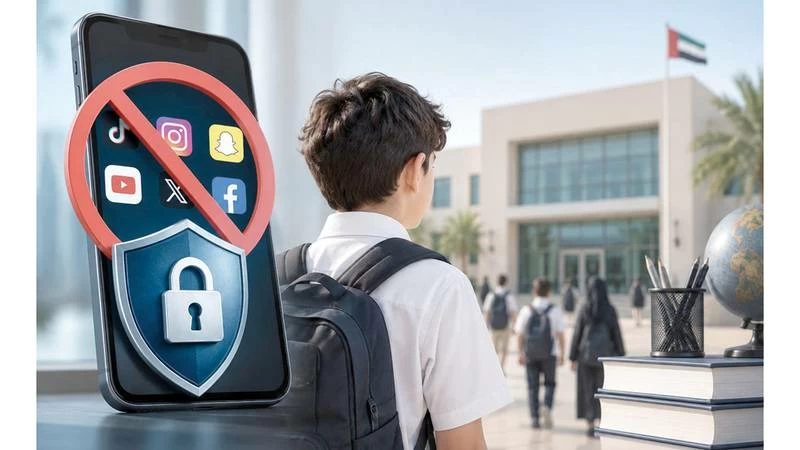
School administrations have restructured their communication systems for students under 15 years of age, after banning their use of social media platforms. Picture credit: AI-generated expressive image

Dubai: With the start of the second week of the 2026-2027 academic year, school administrations have restructured their communication systems for students under 15 years of age, after banning their use of social media platforms. 

They have transferred educational and administrative communication to secure institutional channels, enhancing the role of the family in monitoring messages and alerts, and tightening digital safety procedures to counter attempts to circumvent age restrictions.

School principals identified five paths for implementing the new procedures and controls, which include educational platforms for managing content and tasks, school portals and applications for announcements and services, school email for direct communication, parents’ channels for alerts and approvals, in addition to digital awareness programs, in order to separate personal accounts from the educational environment and ensure the continued flow of information and activities through official, controlled channels.

Educational, family, and psychological experts confirmed that the new phase draws clear boundaries for digital responsibility. Families monitor their children's use outside of school, while educational institutions control their networks, devices, and official channels, build awareness, and intervene when the effects of electronic behaviour extend to the school environment. 

They explained that this does not turn teachers into monitors of students' personal accounts, as the school's role begins when the use affects the student's safety or learning through cyberbullying, taking and posting without permission, abuse, or sharing content that harms students or the school community. 

They stressed that the effectiveness of the application depends on the integration between the school and the family, and the consistency of their rules, so that responsibility extends from controlling access to building awareness and sound digital habits, and providing educational and social alternatives that enhance students' interaction and belonging away from excessive dependence on platforms.

Official channels

Nasser Al-Yasi, the principal of one of the schools, said that students should be contacted through official school channels to deliver academic content and instructions, and not through personal digital accounts. He stressed that the shift moves communication from an open social space to an organised, safe and monitored school environment. The school’s social accounts are no longer the sole source of information, but rather allow announcements of competitions, trips, clubs and events through official channels, to ensure that they reach all students.

Nasser Al-Yasi, a school principal, said that students should be contacted through official school channels to deliver academic content and instructions. Picture credit: Supplied

Salma Eid, the principal of one of the schools, confirmed that the next phase will bring the parent back to the forefront of school communication, by directing attendance, behaviour, activities and approvals to them directly, in exchange for limiting the student's academic needs to the educational platform, which will unify communication paths and reduce the scattering of information. 

She explained that what is required is not to find an alternative to Instagram or Snapchat, but rather to establish a clear and reliable official path for the student and the family, while the school’s accounts on social media remain a front for publishing news, achievements and events, not a gateway to obtaining information and educational services.

For her part, the principal of one of the schools, Etedal Yousef, said that the transformation reinforces the separation between the teacher’s personal account and his professional role, by confining academic communication, activities and follow-up to the approved school systems, away from private messages and accounts. 

She stressed that this separation protects the teacher and the student, makes educational communication documented and easy to follow up, and prevents the overlap of a professional relationship with personal spaces, thus resetting the digital boundaries between the parties of the school community.

Digital security and safety officer Amani Hajir, said that verifying users' ages is the responsibility of the platforms, while the responsibility of schools is focused on their devices, networks, and accounts, implementing access and filtering policies, and addressing attempts to circumvent restrictions within the educational environment. 

She stressed that digital awareness represents a line of defence against the risks of privacy violations, bullying, grooming, harmful content, fraud, and overuse, instead of turning prevention into a technical race to find new loopholes.

Parent Issa Al-Radwan said that implementing the age limit requires clear family rules for the use of digital devices, and a dialogue that builds children’s conviction of the reasons for the restrictions, instead of being satisfied with prohibition, which may push some of them to look for alternative means to access the platforms.

Parent Issa Al-Radwan said implementing the age limit requires clear family rules for the use of digital devices. Picture credit: Supplied

Parent Hala Maher said that directing school messages directly to parents gives the family a clearer view of attendance, activities, instructions and alerts, and reduces the children's reliance on their social media accounts to find out what is happening at school, which requires families to follow the official channels regularly.

Parent Mayada Yassin stressed the need to ensure that the decline in the use of social media does not leave a void in the lives of children, calling for a redistribution of their time between studying, hobbies, sports, activities, and direct social interaction.

Alternatives that make a difference

Educational expert Amna Al Mazmi, said that the success of the transformation is linked to the school’s ability to expand spaces for interaction and belonging within the educational environment, and to direct students’ time towards activities that develop their skills and support their social relationships away from the excessive use of platforms. 

Educational expert Amna Al Mazmi said that the success of the transformation is linked to the school’s ability to expand spaces for interaction and belonging within the educational environment. Picture credit: Supplied

She stressed that student councils, classroom discussions and awareness sessions allow for the promotion of responsible digital culture. She added that sports, cultural and artistic activities, science clubs, robotics, programming, debates, volunteer work and group projects represent effective educational tools to promote direct communication, teamwork and talent discovery, and to consolidate the student’s connection to his school and community.

For her part, family education consultant Dr. Hayam Abu Mashal said that the new phase in the current academic year requires reorganising children's time outside of school, so that reducing the use of platforms is met with expanding the space for sports, hobbies, visits, and family and social activities. 

She stressed that the role of the family goes beyond controlling devices and screen time to building a balanced daily pattern, and promoting dialogue and direct communication within the home, which prevents children from moving from a prohibited platform to another screen or application, and restores balance to their use of technology.

Psychological and social support

Mental health consultant Dr. Iman Mohammed confirmed that reducing the presence of social media in the lives of students under 15 years old requires psychological and social support that strengthens real relationships and a sense of belonging, and limits excessive attachment to the digital world. 

She explained that intensive use of platforms may make some students more attached to digital interaction and following what is happening among their peers, which reinforces the importance of providing real social spaces within the school and home, and paying attention to any noticeable changes in mood or behaviour or a tendency to withdraw. 

She stressed that the goal is to build a balanced relationship with technology, keeping it as a tool for learning and communication without it taking over the student's time or becoming the main source of social relationships or self-esteem.