Oil at $200 a barrel is not a pipe dream
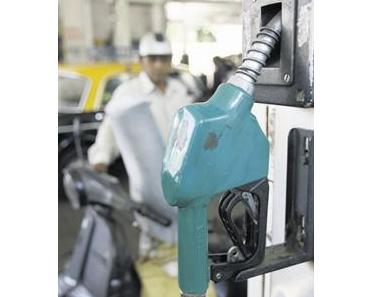
With the price of oil rallying to $140 per barrel, analysts believe that the $200 per barrel oil scenario is becoming very close to reality.
Oil prices more than doubled over the past year to a record $139.12 a barrel on Friday, sparking concern that energy costs will fuel inflation and retard economic growth. Crude oil surged $10.75, or 8.4 per cent, to a record $138.54 a barrel in New York after the US dollar weakened, and Morgan Stanley said prices may reach $150 within a month.
And according to Japanese Trade Minister Akira Amari, when the price exceeds $130 a barrel, crude oil becomes a risk to energy security and the global economy.
The United States, China, Japan, South Korea and India, which together account for half the world's energy consumption, are expected to again urge the Organization of Petroleum Exporting Countries (Opec) to increase supplies and expand capacity in the G-8 energy ministers' meeting in Japan's northern prefecture of Aomori, which begins today.
Opec, however, has remained firm in its stance that the world markets is amply supplied and the high oil price has been caused mainly by speculators. Yet, it is difficult to continue to believe that the world is well supplied with oil given that global inventories were drawn at an average rate of 800,000 barrels per day last year, London-based Centre for Global Energy Studies (CGES) said.
In a statement sent to Emirates Business, it said additional supplies from non-Opec oil producers have already begun to lag well behind expectations, with production in the first quarter of 2008 estimated at 300,000 barrels per day, down on the levels of a year earlier.
CGES said if Opec member countries do not boost production, then, in the absence of non-Opec supply growth, only a slowdown in demand will remove the upward pressure on oil prices.
"In short: a recession that is deep enough and wide enough to affect oil consumption in the developing countries of Asia as well as the developed ones of the OECD," it said. "The longer Opec delays, the more likely recession becomes."
Russian Finance Minister Alexei Kudrin, however, said that Opec is probably incapable of lowering the price of crude oil.
"Cartels are not the institutions to lower prices," Kudrin told the St Petersburg International Economic Forum yesterday.
Oil demand will climb 70 per cent by 2050 and carbon-dioxide emissions will rise 130 per cent from current levels if governments don't make a policy shift, the International Energy Agency, the energy adviser to 27 nations, said yesterday.
Oil imports of China and India will almost quadruple by 2030, precipitating a supply crunch as early as 2015, it said in November.
"Oil is already at unbearable levels," Amari said earlier this week. "If these price levels for crude continue, shifts to non-petroleum-based energy will be accelerated further."
To cut energy consumption and meet emission targets, the Group of Eight industrialised countries will urge China, India and South Korea to agree in setting conservation targets. The 11 nations account for about 65 per cent of global energy use.