News
Saudi oil revenues touch $1bn per day
img_06052008_115aaddf-d59f-411d-8b61-f335ecec31c7.jpg
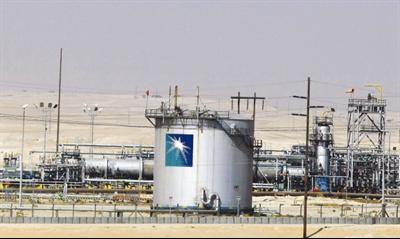
Saudi Arabia is making $1 billion (Dh3.67bn) a day in oil revenues on the back of record global fuel prices, according to a top executive at Riyadh-based Jadwa investment company.
The soaring cost of fuel in recent months has boosted state oil giant Saudi Aramco's revenues from $895 million a day at the end of February to over $1bn currently, said Brad Bourland, Chief Economist at Jadwa.
Half of Saudi's oil income is earmarked for investment in foreign assets, he said, with the era of Middle East sovereign wealth fund presence in the West still in its infancy. "I was with Aramco colleagues on February 29 and I said you guys are lucky because it's leap-year this year so you get an extra day of oil revenues. So we did a bit of back of the envelope math and we decided it was $895m that day, and that was when oil prices were just $80 or $90 a barrel.
"Currently Saudi Arabia is making over a $1bn a day in oil revenues. So $30bn a month, of which about half is being used to support core government spending, and the other half is going to Sama which says it's growing its foreign assets by about $15bn a month," said Bourland. "This is going to continue on and on, and the sovereign wealth story will continue to roll," he added.
Saudi Arabia oil revenues are predicted to hit $16.6 trillion by 2030 with prices at $150 a barrel, according to IEA production assumptions. Oil income for the UAE is expected to reach $4.6trn over the same period and for Kuwait this figure is $4.5trn. In total, by 2030 all three countries will command $25.7trn in revenues with oil priced at $150 a barrel. Sama is Saudi Arabia's sovereign wealth fund responsible for investing government surpluses.
Currently it has foreign assets worth $350bn. Meanwhile, the Abu Dhabi Investment Authority owns $1.3trn in foreign assets and the Kuwait Investment Authority has $250bn to invest, according to Jadwa Investment Company.
Bourland said despite the recent flurry of investment in the West of sovereign wealth money, ownership of foreign assets by Middle East funds was only in its early stages. "The West feels its spent 100 plus years building the private sector companies, so for governments to start buying these assets it's a little bit troubling, and we'd prefer our own government to buy our company not somebody else's government. The view of the institutions is that they've been around for decades, it's just that they're getting big now. They're not doing anything different to what they used to do. They don't want to play politics with these assets they just want to invest.
"The capitals flows from these funds has only begun," he said at the Funds Middle East conference in Dubai this week. Speaking to Emirates Business on the sidelines, Bourland said Saudi Aramco's record oil revenues had reached its highest point in 2008 as he expects the cost of fuel to tail-off towards the end of the year.
"We've reached the peak in the oil prices at $130 a barrel. It will end the year around $70 and overall will average $90 a barrel for 2008. The combination of a slowdown in the US economy along with the sharp rises in gasoline prices will lead to a curtailment in demand for oil, and will result in the price coming down," said Bourland.
Saudi Aramco last month announced plans to invest $129bn on new energy projects in the next five years, as it expands to increase crude, gas, refining and petrochemical capacity.
About $70bn of the total would be spent by international and domestic joint ventures, and the remaining $59bn on projects solely undertaken by Aramco, according to Khalid al-Falih, the company's executive vice president of operations.