GCC in a better position than bourses in the West
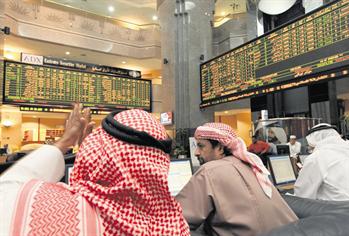
The global financial distress has created a strong link between world stock markets and the oil-rich Gulf but regional bourses remain fundamentally in a better position, a key Saudi investment fund said yesterday.
NCB Capital said the companies in the markets of the six-nation GCC enjoy better asset quality and superior earnings given the massive size of toxic assets in the United States and other Western markets.
In a study, it said it expected an end to the tight relationship between regional markets and those of the West once the global economy begins to recover.
"GCC markets are better positioned than the West… they enjoy significant benefits over the West… an important reason why GCC investors should not mirror the sentiments of developed markets is that the region is better placed than the West. The challenges before the developed markets and the concerns of the GCC vary widely," said NCB Capital, an affiliate of the National Commercial Bank (NCB), the largest bank in Saudi Arabia.
"The GCC has better asset quality than the West… developed markets, especially the US, still need to deal with soured assets. IMF estimates toxic assets at $4.1 trillion (Dh15trn) worldwide with $2.7trn in the US alone…
"This huge pile will suppress the profitability of the US markets, even after global demand picks up. On the other hand, GCC markets are not mired with assets that need to be written down and so in the position to improve quickly as the global economy looks up."
The 20-page study also cited lower leverage cushion for future interest rate scenarios. It noted that developed countries have recently been forced to maintain very low interest rates, to keep markets afloat.
In the GCC, most currencies are pegged to the US dollar and therefore the interest rates are similar in the GCC, it said. In the future, as markets recover, interest rates can rise to some extent, it said, adding that the overall level of leverage of GCC firms is lower compared to developed economies, so the effect will be much lower on the regional markets.
"Superior earnings quality adds to sustainability: in terms of quality of earnings as well, GCC markets have advantages over developed markets. Lately, part of the earnings in the US has come from measures that are highly accounting-dependent. On the other hand, earnings in the GCC are of better quality and therefore more sustainable," NCB Capital said.
"Fundamentals of the GCC have not undergone any significant change and we believe these markets will break away from the recent tightly correlated relationship with the West as the dust settles and confidence is restored in the market. Therefore, instead of trying to model entry points into the regional markets using the movements of developed markets, the prudent investor should keep an eye on leading economic indicators."
It said an investor would not like to "miss out on the significant upside provided by the market once the global economy begins to recover".
The study urged investors to keep watching out for what it called upticks in global oil demand on the grounds a small recovery in demand can lift crude prices. It said a sustained 200 per cent increase of oil price from 2001 to 2006 did not invoke any contraction in oil demand, while even a 14 per cent production cut from Opec could not contain the 70 per cent decline in oil price in 2008 once demand weakened.
"When read in conjunction with the average budgeted price for the GCC at around $40-45 a barrel, it implies that every dollar increase in crude price will directly add to sovereign coffers," the study said.
"Thanks to its significant direct and indirect impact on GCC economies, oil remains at the core of the extent and speed of recovery in regional markets. Recent rises in oil price further boost the attractiveness of the Gulf markets."
The study said investors should also be aware of the fact that unlike developed economies, the GCC is not ridden with toxic assets that can dampen future earnings.
With overall lower leverage, regional companies are also in a better position to absorb any rise in interest rates. "Overall, the GCC is better positioned, compared to the West for sustained growth in the bottom line as a global recovery materialises… fundamentally strong stocks will be direct beneficiaries of the recovery and will add significant upside to an investor portfolio." The study said regional stock exchanges had always remained unaffected by global market sentiments before the situation was reversed by the crisis.
"The financial crisis turned into economic recession broadening its effect globally: after mid-2008, the financial contagion began its transition into an economic recession… while the GCC had remained immune to the destruction of paper wealth in the developed markets so far, subsequent weakness in the broader world economy created a link through which the tailwinds of global gloom finally hit regional markets," it said.
Keep up with the latest business news from the region with the daily Emirates Business 24|7 newsletter. To subscribe to the newsletter, please click here.