AI preparedness essential as technology reshapes media, society: Abdulla Al Hamed
He said individuals have a responsibility to verify information before believing or sharing it, particularly as AI tools become more capable of producing convincing images, videos and written content
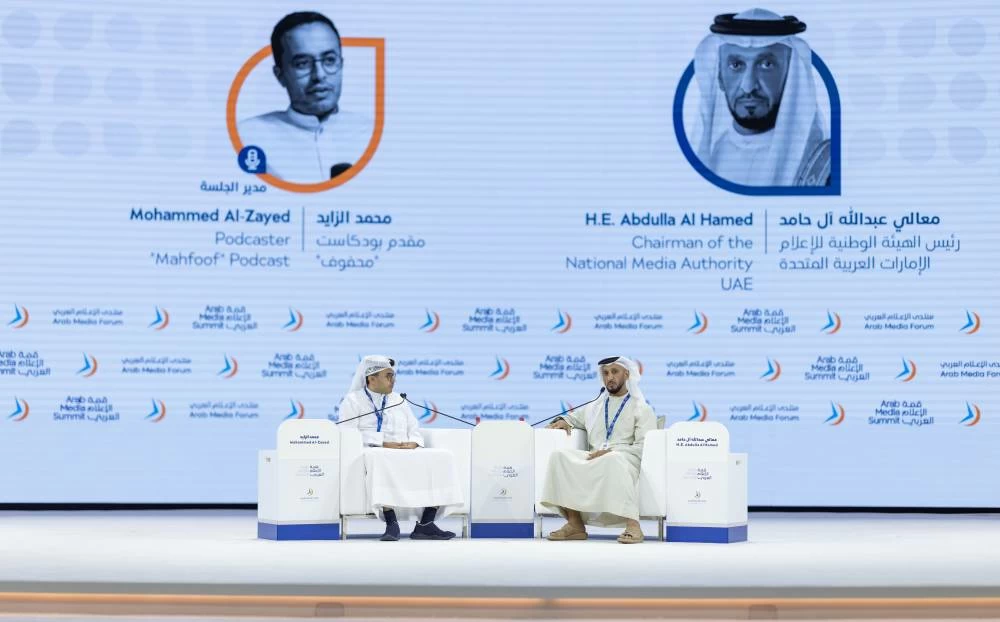
Dubai: Governments, organisations and individuals must prepare for the rapid development of artificial intelligence as the technology increasingly shapes information, media and everyday life, Abdulla bin Mohammed bin Butti Al Hamed, Chairman of the National Media Authority, said during the Arab Media Summit 2026.
Speaking during a session titled "The Next Chapter for Arab Media”, Al Hamed said societies needed to build greater awareness of AI, particularly as increasingly sophisticated content makes it harder to distinguish between genuine and fabricated information.
He said preparedness should extend beyond governments and companies to communities, schools and children.
"The world is changing, and it is our responsibility to keep pace with that change,” Al Hamed said.
He warned that AI could also pose risks to national security if governments and societies were not sufficiently prepared to understand and respond to the technology and the misinformation it can enable.
Referring to misinformation circulated during recent regional developments, Al Hamed said fabricated videos and reports had attempted to create fear by falsely suggesting that incidents had taken place in the UAE.
According to Al Hamed, public trust and awareness played an important role in countering such content, with citizens and residents using social media to challenge false reports and publish footage showing what was actually happening on the ground.
He said individuals also have a responsibility to verify information before believing or sharing it, particularly as AI tools become more capable of producing convincing images, videos and written content.
Al Hamed added that he uses AI tools himself to trace the origins of images and information and assess the credibility of their sources.
Al Hamed said avoiding artificial intelligence was no longer a realistic option, comparing its development to earlier concerns surrounding technologies such as calculators, which eventually became an ordinary part of daily life.
"The question is: will it be dangerous while I am prepared for it, or dangerous while I know nothing about it?” he said.
He added that people should develop enough knowledge of AI to understand both its potential and its risks, rather than rejecting the technology because of concerns about how it may evolve.
Al Hamed said he currently uses more than 120 AI agents to assist with tasks ranging from emails and calendars to reminders, upcoming events and personal organisation.
"Life is going to change. The way we deal with one another is going to change,” Al Hamed said.
Addressing concerns that artificial intelligence could replace jobs, he said sectors including film production, journalism, media and law would all be affected, with AI increasingly taking over certain tasks and giving professionals more time to focus on other areas of their work.
However, he stressed that human input would remain essential.
"No matter how much artificial intelligence develops, the human touch will remain,” Al Hamed said.
He encouraged organisations and employees to embrace AI responsibly as a tool to improve performance, generate ideas and work more efficiently.
"AI helps us with our work. It saves time, helps us improve our performance and can open up ideas that we may not have considered ourselves,” he said.