Arab Media Summit showcases world cultures through the lens of travellers
Arab Media Summit highlights how travel content creators turn journeys into meaningful storytelling, exploring world cultures, self-discovery, planning, challenges, and the evolving profession of travel media
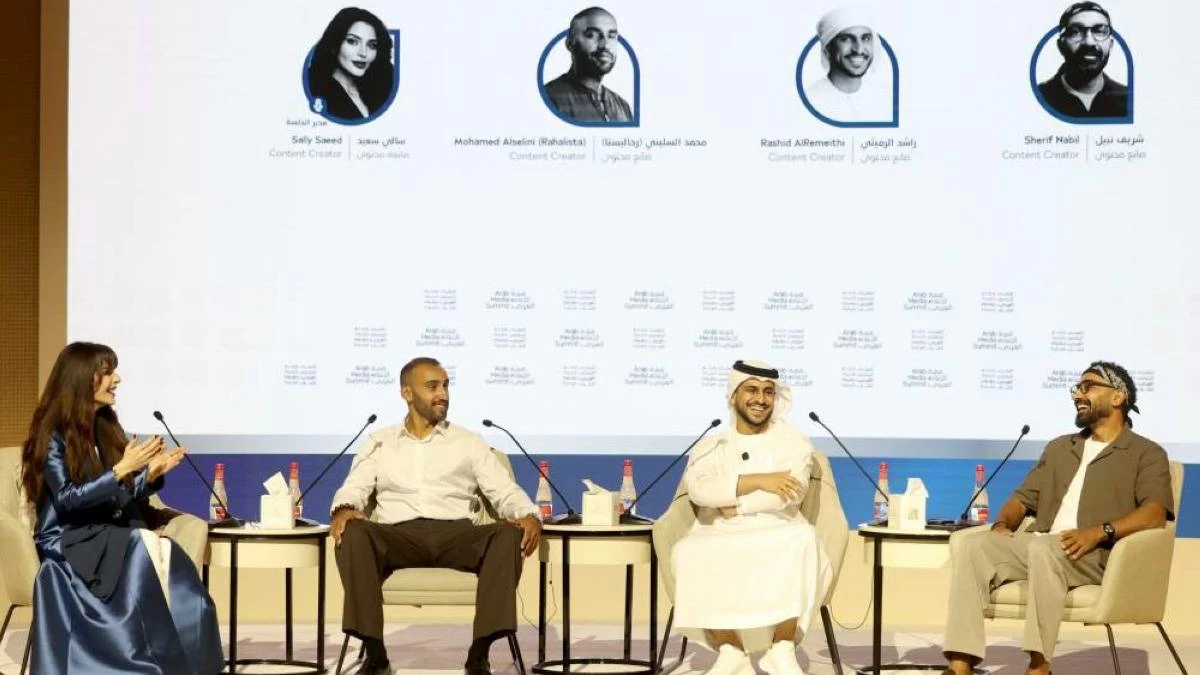
Content creators participating in the session "World Cultures Through the Travellers' Lens" at the Arab Media Summit said that travel goes far beyond discovering destinations and landmarks. It is a human experience that helps people better understand themselves, other cultures and different ways of life. They noted that travel content creation has evolved from a spontaneous activity into a profession that requires planning, management and strong storytelling skills.
The session was moderated by Sally Saeed and featured content creators Rashid Al Rumaithi, Sharif Nabil and Mohammed Al Sulaibi. They shared their experiences in travel and content creation, discussing how they choose destinations, the challenges they face while travelling, and the importance of transforming personal experiences into stories that resonate with audiences.
Rashid Al Rumaithi said that travel is a personal experience that differs from one individual to another. While some people seek comfort and nature, others are drawn to adventure and unfamiliar destinations. He explained that stepping outside one's usual environment provides an opportunity to discover new aspects of personality and capability.
He noted that travel content creation began as a spontaneous activity for many creators before evolving into a more structured profession. It now requires careful planning, including selecting destinations, setting budgets, choosing equipment and developing a business strategy. He said his own journey started with self-funding before content revenues began helping to finance his trips. He also stressed the importance of diversifying income sources.
Speaking about equipment, Al Rumaithi said that owning the latest devices does not necessarily guarantee better content. He noted that a smartphone can often be sufficient, while the ability to communicate ideas and tell stories clearly remains the most important factor.
Sharif Nabil said that people may begin travelling to discover the world, but often end up discovering new aspects of themselves. He recalled a personal experience from his time as an engineer in the oil sector, when a nine-day journey led him to reassess his future and ultimately changed the course of his career.
He explained that the content seen by audiences does not reflect the amount of work that takes place behind the scenes. Travel content requires extensive preparation, including planning routes, organising equipment, selecting filming locations and managing production. He cited a three-day filming experience in the mountains that resulted in about 40 minutes of material. He stressed that hardship is part of the travel experience and that the most challenging journeys often leave the deepest memories.
Mohammed Al Sulaibi said that, for him, travel is not limited to visiting landmarks. Instead, it centres on meeting people, understanding their cultures and learning about their way of life. He believes this is what gives travel its true meaning. He explained that he prefers travelling alone when creating content for social media platforms, while working as part of a team when producing programmes or series for media organisations. He added that his primary goal is to explore the world, with content creation serving as a way to share those experiences with audiences.