Why 'Dubai-it' makes residents smile
Dubai: From the moment they heard the term, they knew what it meant.
‘Dubai-it’ was a term that finally put into words the experience many long-term Dubai residents have struggled to explain to others.
The launch of the initiative by His Highness Sheikh Mohammed bin Rashid Al Maktoum, Vice President and Prime Minister of the UAE and Ruler of Dubai, also helped residents reflect on how the city's work philosophy has shaped their own ambitions and standards.
Defining it as a verb, Sheikh Mohammed posted the definition of 'Dubai-it' on social media: "To achieve something extraordinary with excellence in record time. It's about turning big ideas into reality, just like Dubai's incredible transformation from desert to global city in a short span."
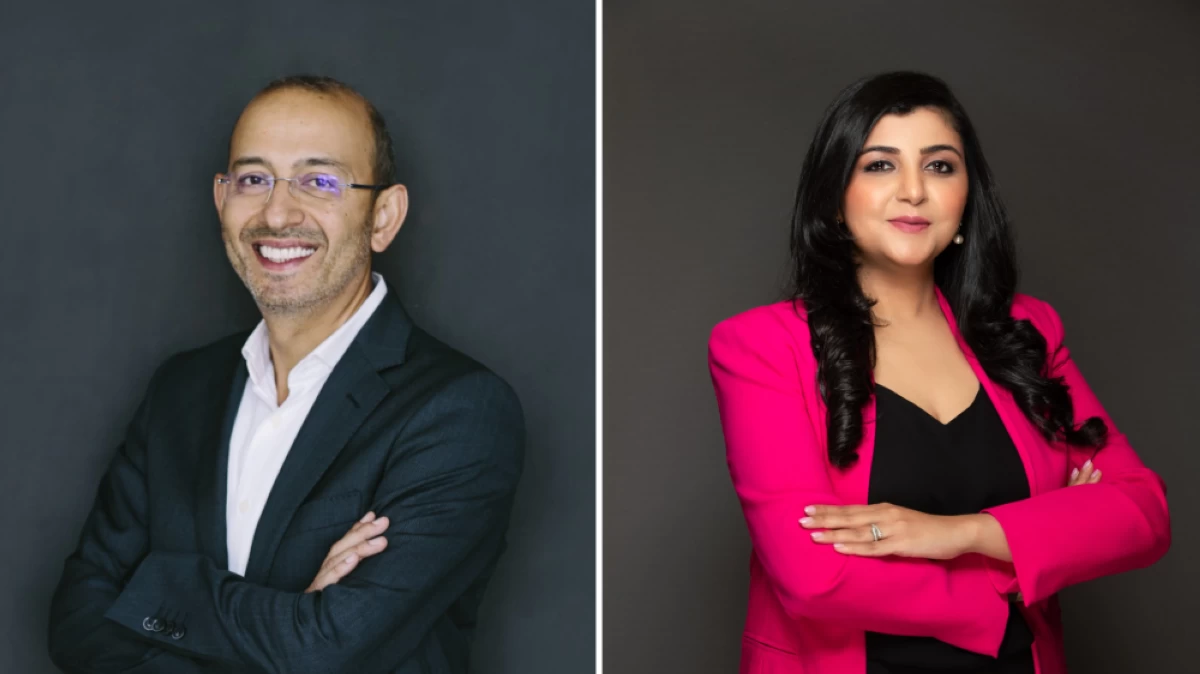
For 44-year-old Chief Human Resources Officer Ritika Bhandari, ‘Dubai-it’ has been a mindset she has seen play out at different levels – from the government, to companies in the emirate as well as the people that call Dubai their home.
“When I first heard the phrase ‘Dubai-it’, I smiled because it instantly gave a name to something I've experienced over the past 15 years of living and working here. People often talk about speed and quality as if you have to choose one or the other. Dubai has consistently proved that you don't. The expectation here is simple: think big, move fast, and execute exceptionally well,” she said.
From the way the city managed the COVID-19 pandemic – with rapidly introduced testing centres, vaccination programmes and clear safety protocols – to how decisions were made during floods or even the recent regional tensions, the Indian national who lives in Dubai with her husband and two children, said that every move ensured speed with precision, keeping the wellbeing of people at the heart of everything.
Commenting on the recent regional tensions, Bhandari said: “While global headlines tried to create anxiety, Dubai prioritised safety, maintained robust security measures, and ensured that schools, businesses, airports, and essential services continued to operate smoothly. That ability to provide stability while the world around it feels uncertain builds enormous trust among residents, investors, and businesses.”
This execution-first mindset is also evident in the way Dubai embraces technology, according to Bhandari.
“Today, many services, from visas and licensing to healthcare appointments, banking, and public services, can be completed digitally in minutes. It's a level of convenience that reflects years of thoughtful planning and relentless execution,” she said.
This is why for Bhandari, ‘Dubai-it’ felt like much more than a slogan. It was the work philosophy she had seen play out over the 15 years she has called Dubai home. And it is one that she plans to implement in her daily life.
“If there's one area of my life where I want to ‘Dubai-it’, it's in shaping the future of work. After more than two decades in HR, I've seen every major shift, from digitisation and automation to hybrid work. But AI is different. It's redefining jobs, leadership, learning, and the employee experience at a pace we've never seen before. My mission is to help organisations embrace this transformation with confidence rather than fear,” she said.
With many businesses still in the ‘discussion phase’ when it comes to AI, Bhandari plans to ‘Dubai-it’ and help organisations build AI-enabled workplaces where “technology enhances human potential rather than replaces it.”
“My goal is to make AI practical, responsible, and accessible,” she said.
Redefining what is possible
Canadian expat Amer Bitar, says he landed in Dubai from Montreal in 2006 with “two suitcases and no real sense of what I was walking into.”
But very soon he realised he was in a city where things happened at an unmatched pace.
“The moment that stuck with me was watching Dubai Media City rise, almost in real time, alongside the roads and towers built to serve it. Coming from a Canadian planning culture, where a project like that would spend years in committee before a shovel hit the ground, I remember standing there thinking I was watching a different definition of ‘possible’,” he said.
“It wasn't just speed. It was the absence of hesitation. Nobody was waiting for permission to be ambitious. That early exposure recalibrated something in me permanently. I stopped asking ‘How long would this normally take?’ and started asking ‘What's actually stopping us?’,” he added.
This early fascination, Bitar says, turned into personal ambition, as the 54-year-old CEO and founder of a brand management agency, decided to “go back to school”, enrolling for a PhD programme in management, driven by one question: How does leadership actually build a global hub from nothing?
“That research eventually became a book, published in 2020 by Palgrave Macmillan, centred on the leadership of His Highness Sheikh Mohammed bin Rashid Al Maktoum, and what the rest of us, whether we're building nations or building companies, can learn from a leadership style that operates on a scale most of us never attempt,” he said.
Today, as he runs his brand management agency, he says that the lessons he learnt and wrote about are something he puts into action every day.
“I stopped treating ‘realistic timelines’ as a fixed ceiling, because I've watched this city, and its leadership, repeatedly prove that ceiling wrong. Personally, it showed up in quieter ways too. Raising kids here who were born and grew up watching a skyline reinvent itself every few years gave them, and me, a strange, useful impatience with the idea that things simply take as long as they take,” he said.
Another great advantage of the initiative, for Bitar personally, is that it’s finally validated a position he’s tried to explain to people for the past 20 years.
“I'd tried to explain this place to friends and family back in Canada more times than I can count, and I always fell short,” he said.
“It's not luck, it's not just money … I never had the right word. When ‘Dubai-it’ was introduced, it named something I'd been living inside of since the year I arrived. There's a particular feeling when a place you've called home for two decades gets distilled into a single word the rest of the world starts using. It's not nostalgia, it's recognition,” he said.