Xi proposes deeper BRICS cooperation as leaders push larger global role for bloc
Chinese President calls for new initiatives in AI, trade and economic cooperation, while India and Russia emphasise development and a multipolar world order
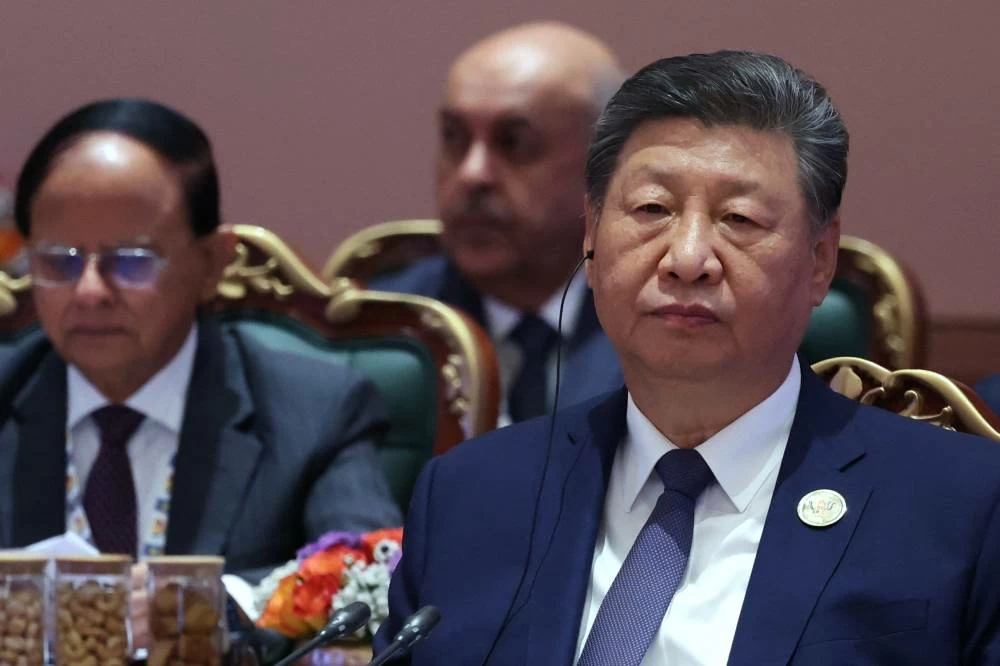
New Delhi: Chinese President Xi Jinping unveiled a series of proposals aimed at deepening cooperation among BRICS nations, as leaders meeting at the 18th BRICS Summit in New Delhi sought to strengthen the bloc's role in the global economy.
Addressing the summit, Xi said the success of the "Greater BRICS Initiative" depends on building a strong foundation for practical cooperation among member countries.
He called for closer collaboration to maintain stable industrial and supply chains and develop a more integrated market across BRICS economies.
Among the proposals announced by Xi were the establishment of a BRICS AI Open Source Zone to promote cooperation on large language models, artificial intelligence training and the wider open-source AI ecosystem.
He also proposed a BRICS Special Economic Zone partnership and announced that China would host a BRICS Service Trade Forum next year to strengthen trade and investment links among member countries.
Expanded BRICS role
BRICS has expanded significantly beyond its original members of Brazil, Russia, India, China and South Africa.
The grouping now includes Iran, Indonesia, Egypt, Ethiopia and the United Arab Emirates, while a further 10 partner countries extend its reach across Asia, Africa, Latin America and the Middle East.
China and Russia have increasingly referred to the enlarged grouping as "Greater BRICS".
Modi calls for wider benefits
Indian Prime Minister Narendra Modi said the benefits of innovations and solutions developed within BRICS should not remain limited to member countries.
He urged that BRICS-led initiatives be adapted and made accessible to countries across the Global South.
Putin backs multipolar order
Russian President Vladimir Putin described BRICS as a powerful force driving the creation of a fairer and more multipolar world order.
He called on member countries to combine the strengths and competitive advantages of their respective economies to increase the bloc's influence.
Middle East discussions
The summit took place amid renewed tensions in the Gulf region following recent exchanges involving the United States, Iran and Iran-backed Houthis.
However, leaders reached agreement on a joint declaration that was supported by both Iran and the UAE.
The declaration expressed deep concern over continuing tensions in the Middle East and called on all parties to exercise maximum restraint.