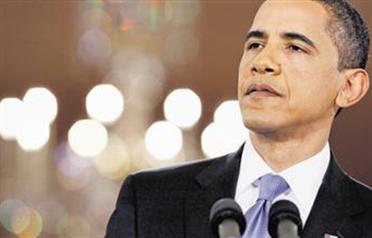
President Barack Obama is set to certify a nuclear energy agreement with the UAE, setting the stage for action in Congress on a pact that could be worth billions of dollars, a leading business official said. Danny Sebright, President of the US-UAE Business Council, said he expected Obama to issue a presidential determination that the agreement, signed in the past days of the administration of former President George W Bush, is in the best interests of the United States. That would set the stage for US Secretary of State Hillary Clinton to formally notify Congress of the United States' intention to enter into the nuclear energy co-operation deal, giving lawmakers 90 days to vote down the pact if they choose, he said. "No vote of approval is required. It's just required to sit there 90 days," Sebright said. Sebright said the UAE wants US assistance in building a number of nuclear reactors to meet an expected need for an additional 40,000 megawatts of electricity by 2017. US nuclear reactor builders, GE and Westinghouse Electric Company, a subsidiary of Toshiba, stand to get a big share of the expected $40 billion (Dh147bn) market if Congress does not block the deal. Representative Howard Berman, chair of the House of Representatives Foreign Affairs Committee, said in January Congress would carefully examine the agreement. Sebright said he believed concerns could be addressed because the UAE, by renouncing uranium enrichment and reprocessing of spent fuels, has made clear "they have no intention of ever wanting a nuclear weapon". When the UAE embarked on plans to develop a nuclear energy programme, they set out "to create a clear alternative to the path Iran is taking in the region" and a number of safeguards to prevent spent nuclear fuel from being used to build weapons are part of the pact with the United States, he said. UAE Minister of Economy Sultan Al Mansouri last month said the Emirates was keenly interested in diversifying energy resources as well as in adopting renewables as the major source of its energy despite being in possession of around 10 per cent of the world's oil reserves. The UAE's leadership is interested in these efforts, he said, adding that Abu Dhabi's Masdar City, the world's first zero-carbon city, was part of the UAE's policy to use clean and environmentally friendly energy to meet at least seven per cent of its energy needs by 2020, creating a $6bn to $7bn market in the next 10 years. Keep up with the latest business news from the region with the Emirates Business 24|7 daily newsletter. To subscribe to the newsletter, please click here .