Divided US House backs Pakistan aid boost
The House voted largely along party lines, 238 to 183, to triple US aid to 1.5 billion dollars annually through the 2013 fiscal year, focusing on development spending aimed at weaning Pakistanis away from Islamic extremists.
"This legislation helps to lay the foundation for a stronger, more stable Pakistan," said Howard Berman, who heads the House Foreign Affairs Committee.
President Barack Obama has strongly endorsed boosting civilian assistance as part of the fight against Al-Qaeda movements in Pakistan and neighboring Afghanistan, which he has made a top priority of his young administration.
While key members of the rival Republican Party support expanding aid to Pakistan, the lawmakers mostly voted against the House bill, arguing that its conditions on Pakistan to keep receiving the aid were too onerous.
The Republicans have found unlikely common cause with Senate Democrats such as John Kerry, who has agreed with Islamabad's case that strict aid conditions risk alienating a Pakistani public already suspicious of US goals.
"Our Democratic colleagues decided to load this bill up with ill-conceived provisions to micro-manage US security assistance to Pakistan," said Dan Burton, the top Republican on the House sub-committee handling South Asia.
"This is not just a debate between (US lawmakers), this is about war and peace and the survivability of Pakistan as an independent nation. It's about winning or losing the war in Afghanistan," he said.
House and Senate members will need to reconcile their two bills, a process which lawmakers say could take a couple of months.
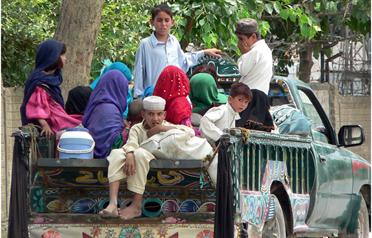
In the meantime, the Obama administration has announced 110 million dollars in emergency aid and requested 200 million dollars more to support 2.5 million people who fled their homes in a Pakistani offensive against militants.
For the final aid package, House Democrats vowed to fight to leave in requirements that the United States keep a detailed account of how Pakistan spends the money and seek proof that Pakistan is clamping down on extremists.
"We are simply asking Pakistan to follow through with the commitments it has already made," Berman said. "And in the process, we lay down an important marker that Congress will no longer provide a blank check."
US officials say that rogue elements in Pakistan's powerful military and intelligence apparatus never severed longstanding ties to the Taliban and have tipped off extremists about impending military action.
House Democrats charge that much of the assistance to Pakistan since the launch of the US-led campaign in Afghanistan in 2001 went unaccounted for, presumably landing in the hands of the military.
The lawmakers voiced hope for a new approach under Pakistan's civilian President Asif Ali Zardari, who replaced military ruler Pervez Musharraf last year.
Congressman Gary Ackerman, a Democrat, said the aid legislation would create a partnership "directly (with) the Pakistani people."
"Our previous strategy of relying on the (Musharraf) government to carry out a war that most of its people detest is not sustainable and I believe contributed significantly to the political instability in that country," Ackerman said.
Ackerman -- one of the most outspoken supporters in the US Congress of India -- pushed for language in the bill to restrict Pakistan from using the US aid to buy jets and other weapons to confront its neighbor and historic rival.
Keep up with the latest business news from the region with the daily Emirates Business 24|7 newsletter. To subscribe to the newsletter, please click here